
Revolutionizing Robotics: How AW-0 Integrates Code-Based Planning for Enhanced Manipulation
In a groundbreaking development in the field of robotics, researchers at UC Berkeley, NVIDIA, and the University of Pennsylvania have unveiled the Agentic World Action Model (AW-0). This innovative framework synergizes code-based planning with predictive dynamics, significantly improving robotic manipulation tasks. By effectively combining code generation with video and action predictions, AW-0 aims to enhance the way robots engage with their physical environment, making them more efficient and adaptable.
Understanding AW-0: The New Paradigm for Robotic Manipulation
The AW-0 framework integrates three vital components: a code expert, a video expert, and an action expert, all unified in a sophisticated mixture-of-transformers architecture. This approach allows for the simultaneous processing of structured skills, future visual predictions, and action commands, providing robots with an unprecedented ability to plan and execute tasks over long horizons.
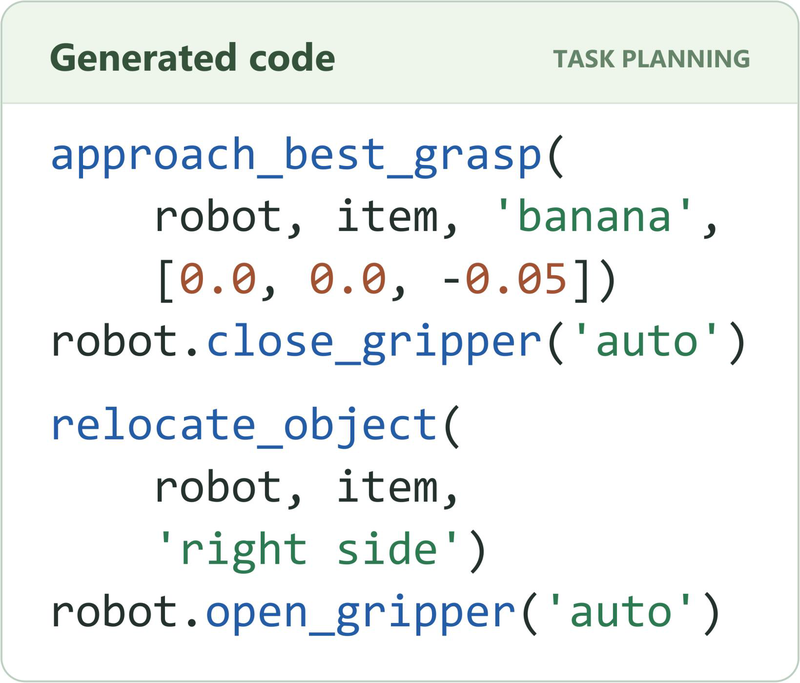
Traditionally, robotic systems struggled with complex manipulation tasks due to a lack of reusable skills and efficient planning. AW-0 addresses this by creating a code library from robot and human demonstrations, enabling robots to leverage a collection of pre-learned actions and adapt them to new situations. This not only increases efficiency but also helps in achieving more accurate manipulation outcomes.
Key Innovations of the AW-0 Framework
One of the standout features of AW-0 is its automated annotation pipeline. This pipeline labels video trajectories with aligned programs, effectively generating a robust library of reusable skills. During the pre-training phase, the model learns from a diverse array of human actions, allowing it to understand and replicate the mechanics of complex tasks efficiently.
In testing, AW-0 has demonstrated impressive performance in both clean and challenging environments. For instance, on the RoboTwin 2.0 benchmark, AW-0 achieved an average success rate of 80.8% under optimal conditions and maintained a respectable 20.6% success rate in random settings—far surpassing traditional methods.
The Impact of Code-Based Planning on Robotic Efficiency
The introduction of structured code has been transformative for tasks requiring precise manipulation, such as replacing light bulbs or arranging items. By allowing robots to refer to a library of coded actions, AW-0 enhances both the planning and execution aspects of robotic behavior, leading to increased reliability and precision.
Through extensive trials, it was noted that when faced with unpredictable environments, the hybrid execution model—which combines both classical direct actions and code-executed actions—was particularly effective. In these scenarios, the framework showed a significant improvement in robust performance, adapting to dynamic changes in real-time.
Future Prospects and Continuous Learning
The researchers view AW-0 as a foundational step toward building more intelligent robot systems that can learn from their own interactions over time. Future iterations may include enhanced online learning capabilities, allowing robots to refine their skills and update the action library based on direct experience.
As robotics technology continues to evolve, AW-0's advancement in agentic skill and action models presents exciting possibilities. The potential integration of this technology into everyday applications, from home automation to complex industrial tasks, could reshape our interaction with machines in profound ways.
In conclusion, the AW-0 framework's innovative approach to integrating code-based planning with robotic manipulation exemplifies how advanced AI can push the boundaries of automation, creating smarter and more adaptable robotic systems for the future.
Authors: {Zhuoyang Liu, Dantong Niu, Botong Zhang, Boning Shao, Jing Wang, Ruijie Zheng, Yuvan Sharma, Runyu Lu, Jiaming Liu, Renrui Zhang, Roei Herzig, Yutong Bai, Ken Goldberg, Danfei Xu, Yuke Zhu, Guanzhi Wang, Linxi “Jim” Fan, Trevor Darrell}


