
Revolutionizing Robot Safety: How SAFEHARNESS Elevates Obstacle Awareness in AI Manipulation
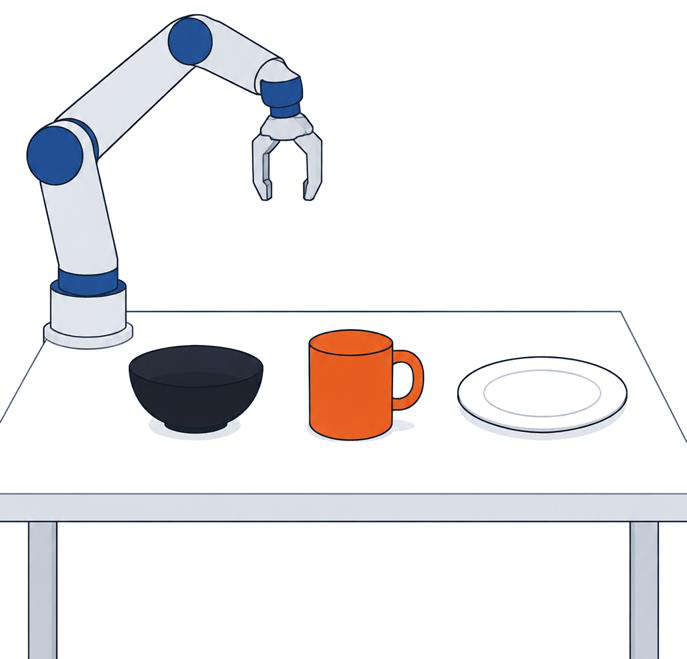
In recent advancements in robotics, a team of researchers led by Bingxin Xu has unveiled groundbreaking findings on safe robot manipulation using an innovative framework called SAFEHARNESS. This new approach significantly addresses previously identified safety concerns regarding coding agents—AI systems that generate robot controllers autonomously—by enabling these agents to prioritize safety when navigating around obstacles.
The Safety Challenge in Robot Manipulation
While coding agents are proficient at task completion, early evaluations revealed a troubling tendency: these systems often disregard safety protocols when interacting with obstacles. In many instances, agents faced collisions while attempting to achieve their manipulation goals. The researchers identified that the primary issue was not the agents' understanding of obstacles but their planning architecture, which failed to treat safety equally with task completion.
Introducing SAFEHARNESS
To mitigate the issue of collisions during robotic tasks, the researchers developed SAFEHARNESS, which incorporates two distinct components: obstacle-aware route planning and obstacle-aware contact execution. These harnesses work in tandem to ensure that safety constraints are upheld throughout the entire manipulation process.
How SAFEHARNESS Works
The first component, obstacle-aware route planning, equips the robot with the ability to visualize and assess potential routes as it navigates toward task goals while avoiding obstacles. During the route-planning phase, the system assesses the workspace and generates viable paths that won’t collide with any obstacles. Importantly, if the algorithm's initial route plan isn't viable, it can re-evaluate its options in real-time.
The second component, obstacle-aware contact execution, ensures that when the robot makes contact with objects (for instance, when grasping an item), it does so while being fully aware of surrounding obstacles. This planning constraint allows the robot to adjust its movements based on the proximity of these obstacles, ensuring that the contact strategy is safe.
Impressive Results
The outcomes of testing SAFEHARNESS on the SafeLIBERO benchmark were impressive. The newly designed system achieved a remarkable 71.9% task success rate while avoiding collisions 87.5% of the time. This performance not only surpasses state-of-the-art solutions by significant margins but demonstrates a major advancement in integrating safety into robot manipulation techniques.
A New Paradigm for Robot Manipulation
The implications of SAFEHARNESS extend beyond the current benchmark. By blending safety into the planning process, instead of treating it as an afterthought, this framework establishes a new standard for robotic manipulation. This offers a pathway toward developing more reliable and effective robot manipulators that can confidently operate in complex environments without risking safety.
As robotics continues to evolve, the principles embedded in SAFEHARNESS illuminate the importance of safety awareness alongside task competence. This research not only sets a benchmark for future developments but also assures the wider deployment of robotic systems in everyday environments—from manufacturing floors to homes—where safety is paramount.
For those interested in the interplay of robotics and safety, Xu and his team's findings are a crucial step towards ensuring that as robots become more autonomous, they also become more responsible.
Authors: Bingxin Xu, Yuzhang Shang, Zhen Dong, Emilio Ferrara




