
Revolutionizing Robot Intelligence: How UniWALM Merges Language, Video, and Action for Smarter Robots
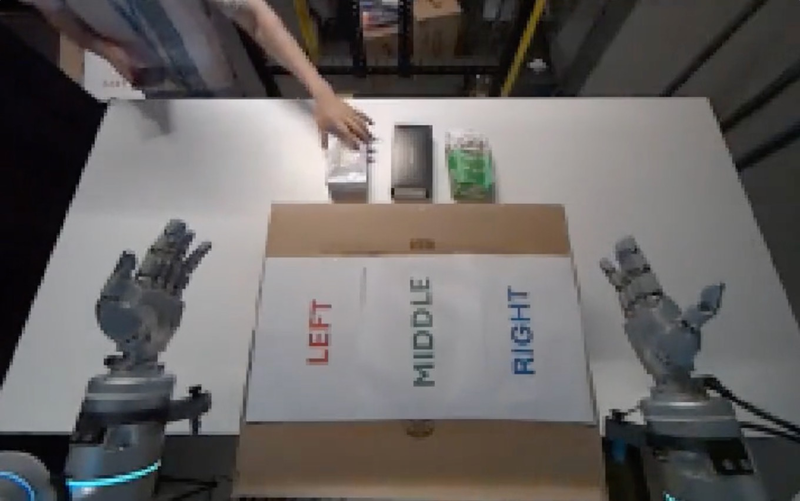
Recent advancements in artificial intelligence have boldly approached the integration of multiple sensory modalities, making robots not just tools, but intelligent entities capable of understanding and interacting with the world. In a groundbreaking new study, researchers have introduced the Unified World Action Language Model (UniWALM), a cutting-edge approach that unifies language, video, and action into one comprehensive framework for robot control. This research could redefine how robots understand instructions and operate in real-world scenarios.
Understanding the Novelty of UniWALM
At its core, UniWALM challenges traditional models that typically separate language processing from visual and action-oriented tasks. Instead of maintaining distinct systems for planning and execution, UniWALM proposes a unified model that allows robots to generate and interpret language while simultaneously carrying out physical tasks. This is akin to how humans process information—integrating verbal commands with visual inputs and physical actions in a fluid manner.
This integration leverages a shared representation capable of handling three modalities: video (for visual inputs), language (for understanding instructions), and action (for executing tasks). Essentially, UniWALM allows robots to "think" in a more human-like way, where they can recall and utilize previous actions as a form of memory through generated language, enhancing their ability to adapt to complex tasks.
Key Features of UniWALM
One of the most exciting aspects of UniWALM is its ability to co-generate outputs across modalities without external planners or memory schemes. The model achieves this by using a single mechanism for noise reduction—termed the “fusion of diffusion heads.” This means that during training, the robot learns from the interactions of language, video, and actions simultaneously, improving its comprehension and execution capabilities without cumbersome dependency on separate modules.
The research also introduces a novel training technique called Flow Matching with Correction (FMC), which significantly boosts the reliability of a robot's actions. By allowing the model to recover from minor deviations in action trajectories, FMC ensures that robots execute commands accurately, even when unexpected obstacles arise.
Significant Improvements in Task Execution
In rigorous testing, UniWALM demonstrated unprecedented success rates across various manipulation tasks. For instance, in the MolmoSpaces benchmarks, UniWALM outperformed previous state-of-the-art models by over 14%, achieving an average success rate that highlights the effectiveness of its integrated approach. When tested in real-world scenarios where items were hidden and needed to be retrieved, the model's performance soared from a mere 11.1% success rate to an impressive 61.1% by utilizing generated textual memory. This shift not only showcases the model’s operational prowess but also its understanding of context and sequence in operations—key elements of intelligent behavior.
The Implications for Future Robotics
The implications of this research extend far beyond robotics. By making machines more intuitive and adaptable, researchers open pathways to advancements in areas like autonomous vehicles, assistive technology, and intelligent urban infrastructure. The potential for UniWALM to enhance interactive experiences in various fields could redefine our relationship with machines and how they integrate into daily life.
In conclusion, UniWALM represents a significant leap toward creating robots that can understand and operate within the complexities of human environments, making them not just tools, but intelligent companions capable of independent thought and action.
For more details on the project and the full research paper, feel free to visit the UniWALM project page.
Authors: Rahul Sajnani, Diego Romeres, Mingyuan Zhang, Kai Gao, Carl Qi, Baichuan Huang, Srinath Sridhar, Dylan Randle, Lillian J. Ratliff, Jose Barreiros, Manikantan Nambi, Jeroen Vanbaar


