
Revolutionizing Rescue Missions: How Quadruped Robots Are Becoming Lifesavers with Smart Frontier Selection
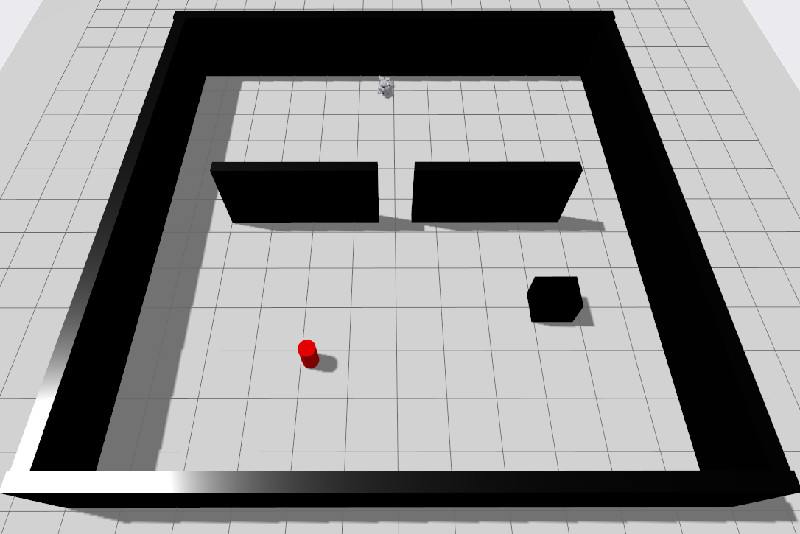
In the world of search and rescue missions, time is of the essence and every second counts. A groundbreaking new study from the Robotics and AI Lab at the Technological University of Uruguay introduces a sophisticated method for enhancing quadruped robots' effectiveness in navigating cluttered environments. Titled "Situation Aware Frontier Prioritization for Quadruped Search and Rescue," this research proposes a strategy that significantly improves how these robots prioritize their exploration during critical missions.
Addressing the Challenges of Search and Rescue
Quadruped robots are particularly adept at traversing challenging indoor environments where traditional wheeled robots may struggle. However, in potential rescue scenarios, merely having a mobile robot isn't enough. These robots must intelligently decide which paths to follow; prioritizing locations that are not only accessible but also most likely to lead to saving lives. Classic methods of frontier selection often falter under such nuanced needs, as they typically do not account for the urgent requirement of locating victims.
A New Approach to Frontier Selection
The proposed method enhances traditional frontier exploration frameworks by incorporating additional parameters into the decision-making process. This includes assessing the information gain (usefulness for mapping), observation deficit (areas still unexplored), rescue relevance (likelihood of finding victims), terrain penalty (difficult or hazardous paths), and travel cost (time or energy expended). By balancing these elements, the robot can better navigate through complicated scenarios, maximizing its chances of successful victim recovery.
Testing the New Methodology
To validate this innovative approach, the authors conducted extensive trials using simulation environments that mimic real-world rescue conditions. They evaluated their method in two distinct rescue scenarios: a straightforward setting with minimal obstacles and a complex situation packed with clutter and multiple potential victim locations. The results were telling; in the simple task, all methods performed adequately, but the complex scenario revealed striking differences in effectiveness. The situation-aware approach outperformed its traditional counterparts, achieving a completion rate of 100% in victim recovery, while other methods lagged behind.
The Impact of Situation Awareness
This research underscores the importance of situational awareness in robotics. The findings highlight that while simpler methods may suffice in low-stakes environments, decision frameworks that incorporate specific rescue objectives lead to considerably better outcomes in more challenging scenarios. The study adds a vital piece to the puzzle of autonomous exploration, especially in disaster response contexts where human lives are at stake.
Future Implications
As the capabilities of robotics continue to advance, the work of Farias and colleagues opens the door for implementing these techniques in real-world rescue missions. Future studies could refine victim identification methods under greater uncertainty and develop field tests on real quadruped robots. This research represents a significant stride towards deploying effective robotic solutions where human intervention is dangerous or impractical, potentially redefining the landscape of search and rescue missions.
By enabling smarter decision-making, quadruped robots may soon become indispensable allies in emergency response strategies, making the difference between life and death in critical situations.
Authors: Kevin Farias, Santiago Martin, Bárbara Flores, Vinicio Melgar, Igor Nunes, Hiago Sodre, Pablo Moraes, and Ricardo B. Grando.




