
Revolutionizing Reinforcement Learning: A New Model-Driven Method to Create Training Environments
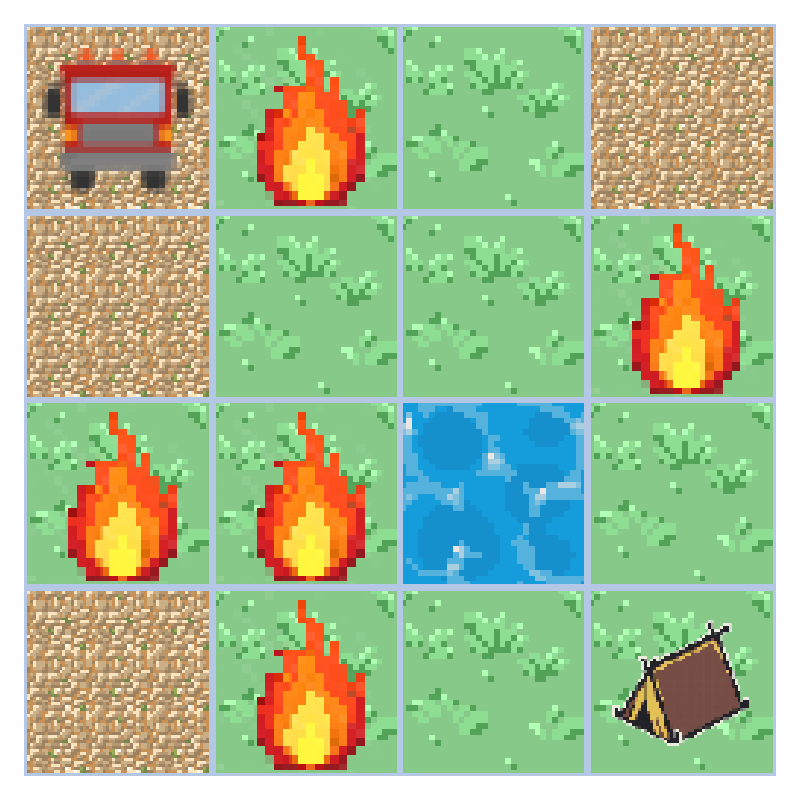
In the fast-evolving field of artificial intelligence, reinforcement learning (RL) plays a pivotal role in training intelligent agents to navigate complex environments. Recent research by Xiaoran Liu and Istvan David presents a groundbreaking model-driven approach for developing families of reinforcement learning environments, which could significantly enhance the efficiency and effectiveness of RL training processes.
Understanding the Challenge of Environment Diversity
Reinforcement learning algorithms thrive on diversity. Traditionally, RL agents are trained in environments that can be very similar but differ in crucial ways. This diversity helps agents to learn transferable skills, avoiding the risk of overfitting to a single environment. However, creating these diverse training environments is typically a labor-intensive process that doesn't scale well. Liu and David point out that as RL applications grow in complexity, the need for automated methods to generate these environment families becomes critical.
Introducing a Model-Driven Approach
The innovative solution proposed by the authors utilizes a hybrid genetic algorithm (GA). This combination of global and local searches allows for efficient exploration of potential environment variations. Their model-driven methodology automates the generation of these environments by employing what are known as model transformations—essentially, changes made to a base environment model that result in new, valid variants.
Prototype in Action: Wildfire Mitigation Scenario
To test their approach, Liu and David implemented a prototype tool in a wildfire mitigation scenario. The environment was constructed using topological grids, where agents had to navigate through various terrains—each with its own set of rewards and penalties—for effective training. This practical example illustrated the utility of their method, producing a series of training environments where agents gradually learn to handle increasing complexity while minimizing the need for manual input from developers.
Benefits and Future Directions
The implications of this model-driven approach are profound. By reducing human intervention and the risks associated with manual environment configuration, researchers and developers can save time and resources while enhancing the learning capabilities of RL agents. Furthermore, the approach emphasizes the significance of curriculum learning—a method where agents progress through a structured sequence of training environments, much like how humans learn new concepts.
Looking ahead, Liu and David express hopes for expanding this approach beyond wildfire mitigation to other complex tasks that AI might confront. The demand for robust and scalable RL training environments is likely to grow as AI systems become more integrated into everyday life, making this research not only timely but essential for future advancements.




