
Revolutionizing Medical Precision: How a Novel Robotic System is Enhancing Head Stabilization in Radiation Therapy
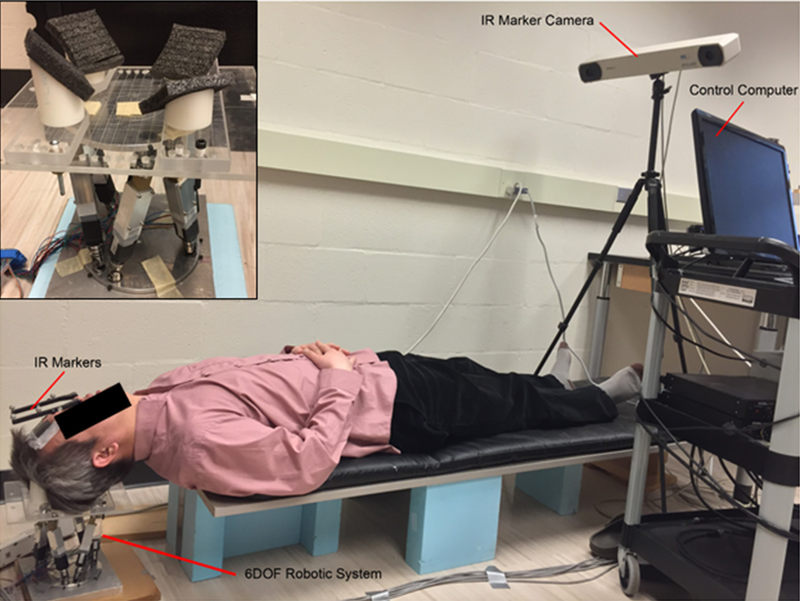
A new study from researchers at prestigious institutions including UCLA and Yale is making waves in the field of medical robotics by introducing a groundbreaking 6-degree-of-freedom (6DoF) robotic head holder. This innovative system aims to transform the way head stabilization is achieved during critical medical procedures like radiation therapy and neuroimaging, ensuring higher precision and better patient comfort.
The Challenge of Head Movement in Medical Imaging
Accurate head immobilization is vital in medical imaging and radiation therapy, where even slight movements can lead to errors. Traditionally, methods like rigid frames or thermoplastic masks have been used, but these can be uncomfortable and require extensive setup time. In response to these challenges, researchers have introduced a robotic solution that can dynamically compensate for natural head movements without the need for physical restraints.
Innovative Technology at Work
The 6DoF robotic head holder integrates real-time optical motion tracking, allowing it to adjust a patient’s head position continuously during medical procedures. This technology demonstrated remarkable results in preliminary tests where head motion was kept under 0.5mm/0.5 degrees 99% of the time. Given that conventional methods often fall short in similar scenarios, this new approach has the potential to significantly enhance the accuracy of stereotactic radiosurgery (SRS), a treatment modality essential for tackling brain tumors and other neural disorders.
Examining Human-Robot Interaction
Understanding the interaction between humans and robots was at the core of this research. The study involved healthy volunteers and aimed to characterize the biomechanics of the head and neck during robot-induced movements. What researchers found is that human head motion does not directly mirror the robot's actions due to intrinsic anatomical constraints, highlighting the need for a human-centered approach in robotic systems.
Key Findings and Future Directions
The robot’s interventions demonstrated consistent patterns of head motion across participants, suggesting potential for a universal model of head dynamics that can be utilized in medical procedures. However, the study also identified limitations in the superior-inferior direction, an important factor that may influence treatment efficacy during stereotactic procedures. Moving forward, the researchers plan to expand their investigation with a larger cohort, gathering more data to refine the robotic platform's use in clinical settings.
This research represents not just a step forward in radiation therapy but also sets the stage for future explorations into human-robot interactions beyond medicine, opening avenues in fields such as rehabilitation robotics and ergonomic enhancements.
Authors: Xinmin Liu, PhD, Alexander L. Van Slyke, PhD, Destinee Holloman, Ahmad Sakaamini, PhD, Rodney D. Wiersma, PhD


