Revolutionizing Energy Dispatch: How New Control Techniques are Making Virtual Power Plants More Efficient
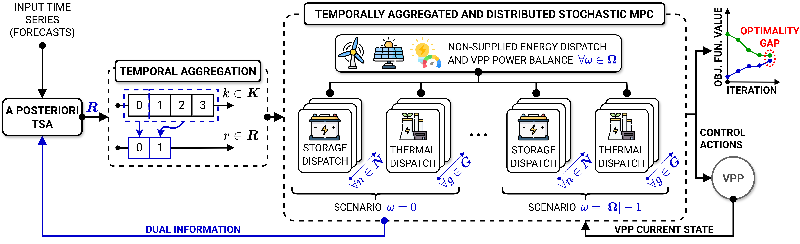
As the world moves towards sustainable energy solutions, the challenge of managing the intricate dynamics of power generation becomes increasingly critical. A groundbreaking research paper by Luca Santosuosso, Fei Teng, and Sonja Wogrin introduces an innovative approach to energy dispatch within virtual power plants (VPPs) that could set a new standard for efficiency.
The Challenge of Renewable Energy Management
The integration of renewable energy sources like wind and solar power poses significant challenges due to their unpredictable nature. When combined with energy storage systems and variable demand, the task of dispatching energy becomes a complex problem. Traditional methods often struggle as the size of the energy portfolio and the duration of the dispatch horizon increase, leading to computational inefficiencies.
A Novel Solution: Integrated Control Techniques
The researchers propose a novel controller that merges stochastic model predictive control (MPC) with time series aggregation and distributed optimization. This innovative blend not only streamlines the problem but also introduces performance guarantees, offering a measurable reduction in computational complexity—over 50% compared to traditional methods.
Understanding the Methodology
The core of this approach lies in its ability to address three key dimensions of complexity: temporal, asset, and scenario dimensions. By utilizing a posteriori time series aggregation (TSA) techniques, the authors refine the operational data, which allows for a more efficient control strategy. This method intelligently clusters time periods based on dual information, optimizing the controller's performance while maintaining accuracy.
Results and Impact
The numerical results presented in the paper indicate a significant advancement in the field. The proposed controller managed to navigate the complexity of real-world scenarios, delivering accurate energy dispatch even under various uncertainties related to demand and pricing. More importantly, it restored tractability to dispatch models where traditional methods had failed, marking a pivotal step forward for VPPs in energy trading and grid services.
Looking Ahead
This research not only enhances the current methodologies employed in virtual power plants but also opens up pathways for further investigations, including the incorporation of additional factors like transmission constraints and networking aspects. As the reliance on green energy grows, the insights from this paper could prove crucial in shaping the future of sustainable energy management.
In conclusion, this innovative control framework stands to change how virtual power plants operate, paving the way for a more resilient and efficient energy grid. The integration of cutting-edge techniques could help harness the full potential of renewable energy resources, facilitating a smoother transition to a sustainable energy ecosystem.
Authors: {Luca Santosuosso, Fei Teng, Sonja Wogrin}

