
Revolutionizing EEG Analysis: How BrainCodes Can Change the Game for Portable Neural Monitoring
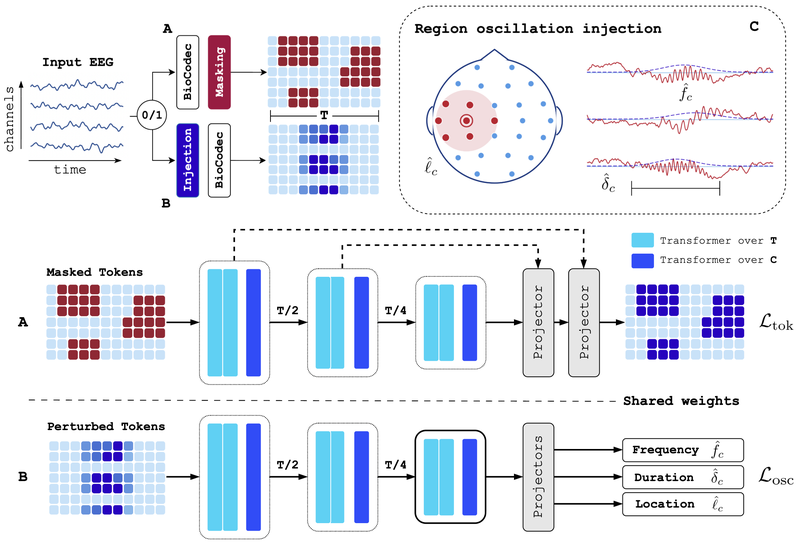
In the rapidly evolving field of neuroscience, recent advancements have introduced a groundbreaking model known as BrainCodes, which is set to transform the way electroencephalography (EEG) data is processed, analyzed, and applied, particularly for portable and consumer-grade devices. This compact, lightweight foundation model efficiently extracts neural signals and is designed to function effectively even on devices with limited resources, making it a game-changer in both clinical and everyday settings.
What is BrainCodes?
BrainCodes is a new EEG foundation model developed by researchers at the University of Southern California and Microsoft Research. Unlike larger and more complex models that typically require extensive computational resources, BrainCodes operates on a much smaller scale with just 1.9 million trainable parameters. This compact structure allows it to closely match or even surpass state-of-the-art results across various neurophysiological monitoring tasks, including sleep staging, attention assessment, and cognitive load estimation.
Self-Supervised Learning: A Key Feature
At the heart of BrainCodes is a self-supervised learning architecture that has been pre-trained on over 800 hours of EEG recordings from more than 1,000 participants. This extensive training enables the model to learn transferable EEG features, which are crucial for accurately interpreting brain activity in diverse situations. By utilizing a quantization-based neural tokenizer combined with a spatiotemporal encoder, BrainCodes can work with arbitrary electrode configurations, further enhancing its versatility.
Unmatched Performance in Real-World Applications
The BrainCodes model has demonstrated impressive performance, even in low-resource setups. For instance, it retains up to 91% of its full-montage performance with just four electrodes, proving its suitability for portable devices like smart headbands. This efficiency is not only beneficial for practical applications but also allows for the deployment of advanced EEG analytics in daily life, potentially democratizing access to brain health monitoring.
Key Findings and Contributions
Among its many accomplishments, BrainCodes shows remarkable sensitivity to meaningful neural oscillations, capturing spatial connectivity through channel positional encoding. Notably, it excels in tasks that require understanding both the rhythmic structure of EEG signals and their spatial relationships—a critical aspect often overlooked by traditional models. As a result, clinicians and researchers can gain deeper insights into brain dynamics, leading to better interventions for conditions like epilepsy and sleep disorders.
Moving Forward: Potential Impacts of BrainCodes
As BrainCodes continues to evolve, its potential applications are vast. From wearables that monitor mental health status in real-time to devices that assess cognitive load during complex tasks, the implications are enormous. Moreover, the ability to deploy such a powerful model on consumer-grade hardware not only opens new avenues for research but also paves the way for advancements in personal health and wellness monitoring.
In conclusion, the innovative design and functionality of BrainCodes underscore a significant leap forward in EEG analysis and its applications. With its lightweight framework, efficient resource usage, and superior performance, BrainCodes is set to redefine how we engage with neural signals in our everyday lives.


