
Revolutionizing Database Performance: Meet SWatcher+, The Innovative Framework for Cardinality Estimation
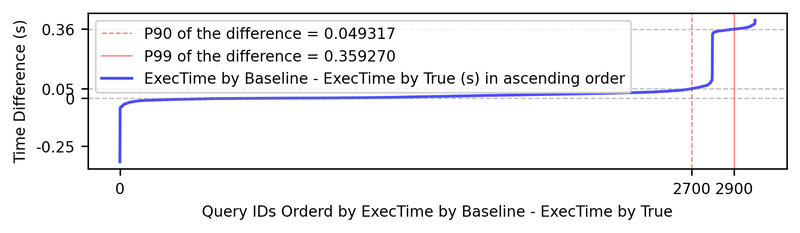
In the evolving landscape of data management, cardinality estimation (CE) plays a crucial role in optimizing database queries. Recent advancements in machine learning have bolstered the accuracy of CE models; however, deploying these models in dynamic database environments has remained a challenge. Enter SWatcher+, an innovative framework designed to enhance the adaptability of learned cardinality estimators to shifting data and query workloads.
The Challenge with Traditional Cardinality Estimation
Database query optimizers traditionally rely on static cardinality estimations to generate execution plans. As data changes and workloads fluctuate, these estimates can become outdated, leading to less-than-optimal query performance. The traditional method of periodic retraining is often both time-consuming and inefficient, resulting in systems that struggle to maintain accuracy in real-time scenarios.
Introducing SWatcher+: A Holistic Approach
SWatcher+ revolutionizes the deployment of learned CE models by proactively monitoring data updates and query feedback. Instead of waiting for full model retraining, SWatcher+ focuses on selectively tracking high-impact subqueries—those for which inaccurate estimates might severely hamper query performance. By applying immediate corrections, it enables databases to adapt quickly to changes without the heavy burden of constant retraining.
Key Innovations and Benefits of SWatcher+
The framework boasts several novel features:
- Selective Monitoring: SWatcher+ intelligently decides which subqueries to monitor based on their impact on performance, significantly reducing overhead compared to simpler monitoring strategies.
- Proactive Corrections: It utilizes real-time data to rectify estimates dynamically, improving query execution plans instantly rather than waiting for periodic model updates.
- Efficient Use of Resources: By emphasizing cost-effective monitoring and correction, SWatcher+ typically operates with a smaller watchset than traditional frameworks, optimizing overall system performance.
Empirical Results Demonstrating Effectiveness
Experimental results have showcased that SWatcher+ outperforms existing methods, including traditional periodic refreshes, across a variety of query templates. Notably, it exhibits:
- End-to-end running times, achieving up to 44.3% improvement in efficiency over periodic refresh models.
- Superior adaptability to complex OLAP-style queries, with effective corrections leading to improved performance results.
- Optimal resources allocation—particularly beneficial for large databases—through its selective monitoring capabilities.
The Future of Database Query Optimization
As organizations increasingly rely on data-driven strategies, frameworks like SWatcher+ represent a significant leap forward in database management. By balancing the trade-offs between real-time adaptations and resource expenditure, SWatcher+ not only enhances query performance but also lays the groundwork for future innovations in dynamic database environments. The research paves the way for more robust models that are resistant to workload changes, ultimately providing more reliable and efficient database operations.
By integrating intelligent monitoring and adaptive mechanisms, SWatcher+ sets a new standard in the field of cardinality estimation, promising a future where databases can dynamically evolve without compromising on performance.
Authors: Yuxi Liu, Vincent Capol, Xiao Hu, Pankaj K. Agarwal, Jun Yang


