
Revolutionizing Data Analysis: How Robust Multi-Task Learning is Transforming Principal Component Analysis
In a world increasingly driven by data, the ability to analyze high-dimensional datasets efficiently is more essential than ever. A groundbreaking new research paper titled "fRobust Multi-Task Learning for Principal Component Analysis" by Dali Liu and Haolei Weng addresses the inherent challenges of analyzing data from multiple sources with potentially different distributions. The paper introduces advanced methodologies in Principal Component Analysis (PCA) that enhance data interpretation while ensuring resilience against outlier tasks.
The Challenge of Multi-Task Learning in PCA
Principal Component Analysis (PCA) serves as a fundamental technique widely used for dimension reduction and understanding data structures. However, when data is drawn from multiple sources—like patient samples from different hospitals or financial data across various markets—understanding the commonalities and differences between these datasets can be complex. Some tasks may share similarities while others could be starkly different or even contaminated by anomalies.
The research proposes innovative multi-task PCA procedures that exploit similarities between tasks to improve eigenspace estimation while being robust to tasks affected by outliers. This dual focus is vital in real-world scenarios, where data quality can vary significantly from source to source.
Key Methodologies and Innovations
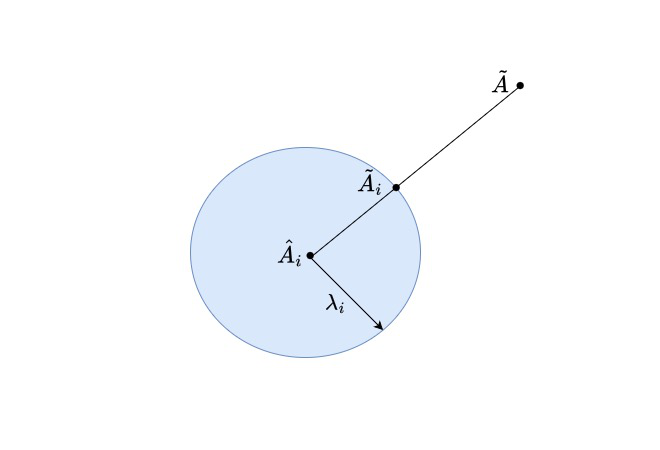
The authors introduce two main multi-task PCA procedures that operate within a robust two-stage framework. The first stage establishes a robust center estimator that captures shared eigenspace structures across related tasks. The second stage utilizes this center estimator, adapting it to individual tasks through a novel soft-thresholding technique to refine eigenspace estimations.
What sets this approach apart is its adaptability and robustness. By formulating their multi-task PCA problem under a Huber-type contamination model, Liu and Weng effectively tackle the challenge of outlier tasks that may deviate from standard distributions.
Statistical Guarantees and Practical Implications
The paper lays down non-asymptotic convergence rates for the proposed methods, demonstrating that they achieve optimal accuracy rates in various settings. Through extensive simulations and real-data analyses, the authors showcase the empirical performance of their techniques, affirming their effectiveness across a range of scenarios, including single-cell measurements in biology and financial data analysis.
This research provides not just theoretical contributions but practical methodologies for industries struggling with multi-source data analysis. By leveraging the relationships between tasks while resisting the negative effects of outliers, businesses can make better decisions based on robust statistical insights.
Conclusion: The Future of Data Analysis
This revolutionary approach to robust multi-task learning in PCA could reshape how researchers and organizations analyze data in diverse fields. By combining innovative statistical techniques with practical applications, Liu and Weng's work presents a promising path forward for effective data analysis in an increasingly complex world.
For data analysts and statisticians, adopting these advanced methods may not only enhance the quality of insights derived from high-dimensional data but also facilitate collaboration across various fields and disciplines, further amplifying the potential of data-driven decision-making.
Authors: Dali Liu, Haolei Weng




