
Revolutionizing Animation: How Joints, Camera, Action! Sets a New Standard in 3D Motion and Video Generation
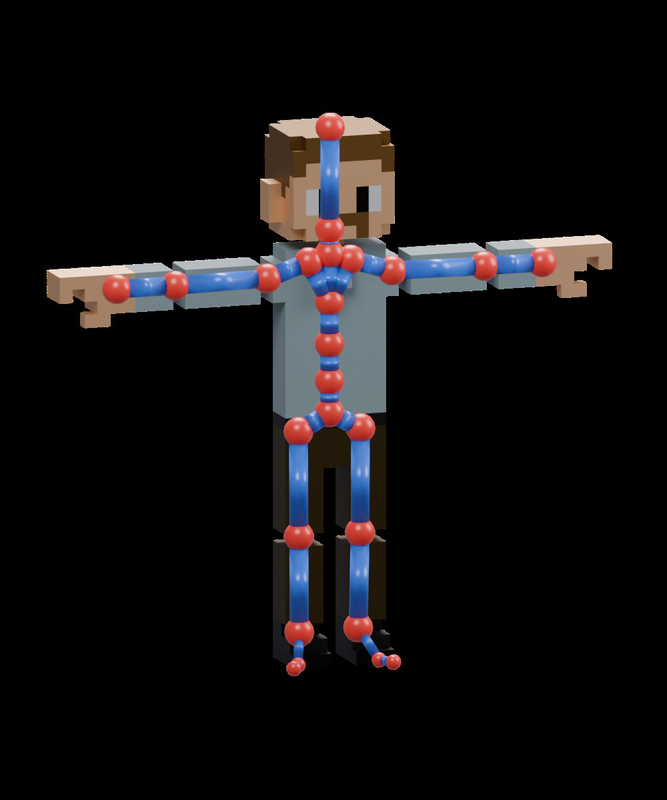
A groundbreaking new model, Joints, Camera, Action! (JCA), is changing the landscape of animation and virtual reality. Developed by a research team at NVIDIA and the Technion–Israel Institute of Technology, JCA can simultaneously generate realistic video and 3D motion for a varied range of digital models, from animated animals to humanoid robots. This pioneering approach allows for unprecedented control and precision in creating animated sequences, promising to enhance the future of video games, movies, and virtual presentations.
The Challenge in Video Animation
Despite remarkable improvements in video generation technologies, existing models have one major limitation: they produce stunning visuals, but lack the ability to transfer that motion data back to a 3D model, meaning that the generated actions cannot be easily reproduced in a physical or virtual space. Think of a model that can display a video of a monkey jumping over a bar, yet fails to provide the necessary 3D motion data for a user to animate that model in a 3D environment.
Traditionally, animating a character or object in response to generated video has relied on either extensive human effort or overly complex models that add billions of parameters, making them hard to use and inefficient.
How JCA Works
The JCA model cleverly overcomes these limitations by dividing the animation process into two interconnected, but distinct, components: a motion model and a video model. The motion model learns how to animate various rigs (digital skeletons) based on simplified, motion-only data, while the video model delivers high-quality visual content. This separation allows JCA to leverage the strengths of both models, significantly reducing complexity and improving efficiency.
Furthermore, JCA introduces a novel method for tracking the motion of rigged characters in 3D space by cleverly estimating the positions of skeletal joints within the generated video frames. This dual-focus approach lets users visualize and replay 3D motion in a specified environment while maintaining the fidelity and synchronicity between video and motion.
A Vast Database for Training
To train the model effectively, the researchers generated a comprehensive dataset combining nearly 200,000 pairs of video and motion data, built from diverse sources such as animated digital assets and actual human and robot motion videos. This robust training regimen ensures that JCA can adapt to a wide range of animating tasks, from playful animal antics to realistic human movements, steering clear of the limitations faced by other models limited to specific types of animations.
Real-World Applications
The potential applications for JCA are vast. It could be used in the film industry for creating animated characters that interact dynamically with their environments. Video game designers can incorporate JCA technology to provide players with a more immersive and reactive experience. Furthermore, educators and trainers could benefit from JCA in developing realistic simulations for training purposes.
Conclusion
The JCA model is not just an evolution in technology; it's a revolution in how we create animated content and interact with digital environments. By simplifying the complexities of motion generation while ensuring high-quality output, JCA sets a new standard that could reshape various industries across entertainment, training, and beyond.
As technology continues to advance, one thing is clear: the future of animation is here, and it promises to be more interactive and engaging than ever before.
Authors: Noam Rotstein, Yoad Tewel, Chen Tessler, Haggai Maron, Gal Chechik, Or Litany, Yoni Kasten, Yuval Atzmon


