
Revolutionizing AI Interactions: Unlocking Implicit User Feedback to Boost LLM Alignment
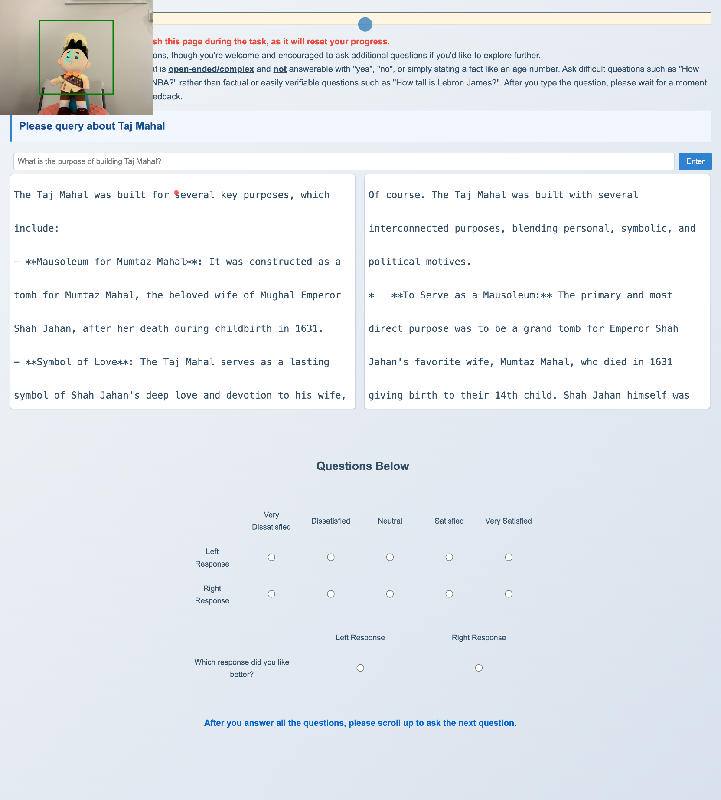
In the rapidly evolving world of artificial intelligence, particularly with Large Language Models (LLMs), researchers at the University of Massachusetts Amherst and York University are making strides in how we align AI systems more effectively with human preferences. Their recent study, titled "Your Mouse and Eyes Secretly Leak Your Preference: LLM Alignment using Implicit Feedback from Users," explores the use of implicit feedback from users, which had previously been underutilized in enhancing LLM performance.
The Need for a Paradigm Shift
Traditionally, aligning LLMs with human preference has relied heavily on explicit user feedback, like thumbs-up or thumbs-down ratings, which can be frustratingly sparse. The paper highlights that only a mere 1-3% of users provide such feedback, making this method not only inefficient but also inadequate for serious AI alignment practices. This is where the researchers step in with a novel approach that taps into implicit feedback through user interactions such as mouse movements and eye-tracking data.
Introducing the IFLLM Dataset
To facilitate their research, the authors developed the IFLLM (Implicit Feedback for Large Language Models) dataset, which includes comprehensive data from 1,336 multi-turn question-answering interactions. Participants, recruited through Amazon Mechanical Turk, had their mouse trajectories and eye movements captured as they engaged with LLMs. This groundbreaking dataset allows for a unique analysis of how users naturally interact with AI responses, shedding light on the often-overlooked details of user behavior.
Visual Gaze and Mouse Movement: Hidden Signals of Preference
The researchers found that implicit feedback via eye-tracking showed diverse user reading behaviors. Interestingly, eye movements were more consistent for shorter responses, while mouse movements became increasingly correlated with gaze as response length grew. This correlation indicates that users interact differently based on the length and complexity of the responses they receive, providing valuable insight into how AI responses can be improved.
Real-World Implications: Improving LLM Response Quality
The study concluded that integrating implicit feedback—especially mouse movements—into the architecture of reward models significantly boosted the accuracy of predicting user preferences. The researchers noted a leap in model performance, highlighting that after applying their optimized design and data collection methods, they achieved a 64% accuracy rate compared to a mere 55% with traditional text-based models. This improvement has vast implications for the development of future AI systems that can better serve users' needs.
Conclusion: A Future Driven by User Interactions
The research emphasizes a critical shift in the way user feedback is approached in AI development. By harnessing implicit feedback, LLMs can learn not just from what users say, but from how they behave. This new strategy not only enhances AI's alignment with human preferences but also allows for a more scalable, efficient method of improvement. As organizations move toward adopting these findings, the user experience with artificial intelligence could undergo a transformative enhancement, ultimately leading to AI systems that understand and respond to human needs more intuitively.
Authors: Haw-Shiuan Chang, Jeffrey Gomez, Mehul Patwari, Aryan Sajith, Hamed Zamani




