
Revolutionary Real-Time Coordination: How WarpWeaver Optimizes Multi-Robot Systems
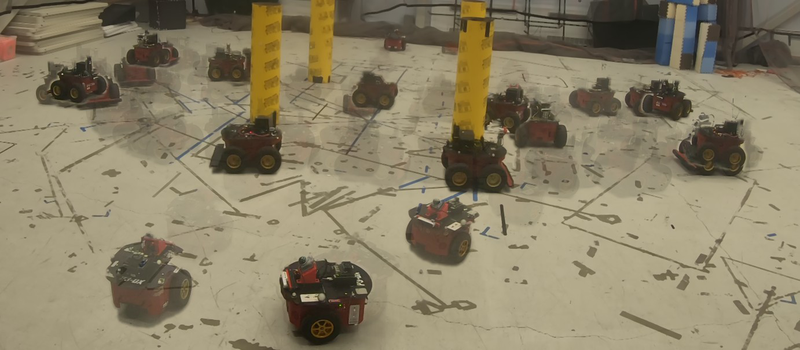
A groundbreaking study introduces WarpWeaver, a decentralized real-time planner that enhances the coordination of multi-robot teams. This advancement significantly improves the robots' ability to navigate complex environments and work together efficiently, tackling the challenges associated with nonlinear control systems and dynamic interactions.
Understanding the Need for Coordination
In multi-robot operations, effective communication and coordination are crucial for task success. Traditional methods often rely on centralized systems that are not only time-consuming but can also lead to inefficiencies and delays, particularly in dynamic environments. The research paper identifies these challenges and presents WarpWeaver, which promises to optimize real-time navigation while approaching the joint optimal control of groups of robots.
What is WarpWeaver?
WarpWeaver is a decentralized, real-time planning protocol designed for coordinating multiple robots. It leverages the concept of dispersive trees—a structure that allows for the identification of near-optimal paths through local command adjustments while negotiating jointly shared spaces. Unlike centralized planning that processes all data in one location, WarpWeaver enables each robot to make decisions based on local information and interactions with other robots.
A Key Innovation: Dispersive Tree Agreements
The core of WarpWeaver lies in its method of forming dispersive tree agreements. This approach allows individual robots to share and negotiate their trajectories asynchronously, ensuring that local decisions align with the group's overall objectives. By doing so, the system enhances robustness to changes in the environment and individual robot objectives without compromising on safety or efficiency.
Real-World Applications and Efficiency Gains
In simulation tests, WarpWeaver demonstrated significant reductions in total travel time—up to 22% compared to centralized offline planners and 37% against decentralized real-time planners. Furthermore, during real robot trials involving various tasks such as pathfinding and connectivity maintenance, the system showcased its ability to keep multiple robots coordinated without collisions, achieving successful completions in various scenarios.
Conclusion and Future Directions
The implementation of WarpWeaver marks a significant milestone in the field of multi-robot coordination, presenting a viable solution to the long-standing challenges of real-time planning in robotics. As the authors conclude, incorporating differential methods may allow for even more tightly-knit coordination in future iterations of this work, driving further advancements in the efficiency and effectiveness of robotic teams.
Authors: Shashank A. Deshpande, Blake T. Edwards, and Jonathan P. How


