
Redefining Quantum Engines: The Surprising Power of Measurement and Squeezing in the Quantum Otto Cycle
A groundbreaking study led by S. R. Rathnakaran and Asoka Biswas from the Indian Institute of Technology-Ropar has brought forth an innovative approach to quantum heat engines, specifically utilizing a novel quantum Otto engine framework built around the two-qubit quantum Rabi model. Their research elucidates how squeezing and measurement can significantly enhance the operational efficiency and power output of quantum engines—pushing beyond the conventional limits.
Understanding Quantum Otto Engines
At its core, a quantum Otto engine operates on the principles of thermodynamics but at the quantum level, revealing the fascinating interplay between energy, heat, and work within quantum systems. The traditional design relies on two thermal baths—a hot source and a cold sink. However, Rathnakaran and Biswas have taken a creative leap by utilizing a single non-Markovian hot thermal bath and substituting the usual cold reservoir with a projective measurement protocol on the cavity mode, thereby introducing a measurement-induced cooling effect.
Making Squeezing a Quantum Resource
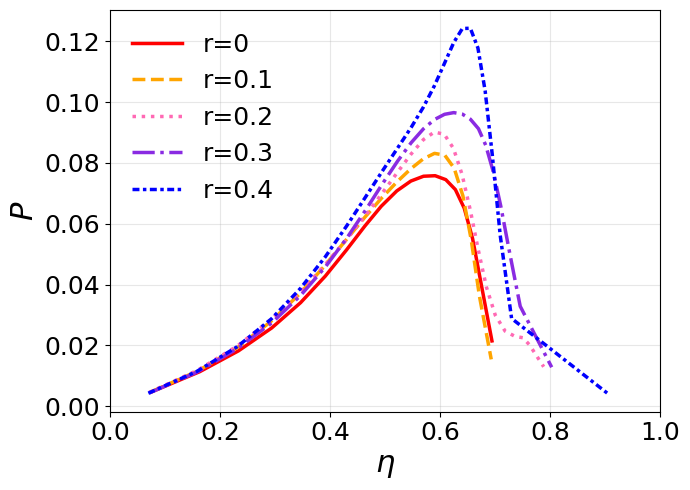
The research highlights the role of cavity squeezing as a “quantum fuel.” In simple terms, squeezing refers to the manipulation of the quantum states of light (or other quantum systems) to reduce uncertainty in one variable while increasing it in another. This manipulation allows for enhanced performance of the quantum engine by systematically improving both the output power and operational efficiency. The study established that through careful control of the squeezing parameters and coupling dynamics, the engine could extract more work per unit of heat from the hot bath than standard setups.
Significant Findings and Implications
The key findings from the research indicate that the efficiency of the quantum Otto engine remains above the traditional Otto limit throughout its operation, showcasing a stable limit cycle where the efficiency approaches the theoretical maximum from above. This represents a significant leap in quantum thermodynamics, suggesting that squeezing could be a powerful and controllable resource for optimizing thermodynamic processes in quantum systems.
Furthermore, this research opens the door to potential practical applications in quantum technologies. The ability to enhance energy efficiency and power outputs in quantum devices can drive advancements in fields ranging from quantum computing to efficient energy systems.
Overall, Rathnakaran and Biswas’ exploration into the realms of quantum thermodynamics provides critical insights that could profoundly influence the design and functionality of future quantum heat engines, redefining our understanding of energy transformation in quantum contexts.




