
Redefining GPU Efficiency: How PixelFlow Optimizes Workload Management for Advanced Image Generation
The research paper titled "fPixelFlow: Token-Level Workload Management for Efficient Distributed DiT Serving" introduces a groundbreaking system designed to enhance the performance and efficiency of online image generation using Diffusion Transformers (DiTs). This study tackles the challenges of managing varying workloads, optimizing latency, and efficiently utilizing GPU resources during image generation tasks.
Understanding the Challenge of Image Generation
In recent years, generative AI, particularly in the field of text-to-image generation, has gained immense traction. Diffusion Transformers represent a leading architecture in this domain, whereby images are generated through the denoising of sequences of visual tokens. However, existing systems struggle with balancing between GPU resource utilization and maintaining strict latency service-level objectives (SLOs). While these systems have attempted to manage workloads through batching, they often encounter problems with either underutilizing GPU capacity or failing to meet latency requirements.
Introducing PixelFlow: A New Paradigm
PixelFlow presents a novel approach by adopting token-level workload management. Rather than treating requests as indivisible units, PixelFlow breaks down requests into smaller components—image tokens. This flexibility enables GPUs to partially process requests based on their remaining capacity, allowing for better resource allocation and minimizing waiting times. The innovative design results in improved GPU utilization and lower queuing delays.
Key Innovations and Mechanisms
1. **Token-Level Workload Management**: PixelFlow's key innovation lies in its ability to divide workloads at a granular level, enabling GPUs to individually gauge and take on workload portions that fit within their available resources.
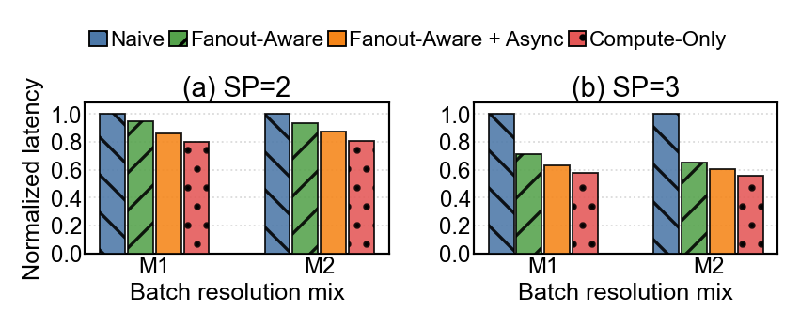
2. **Efficient Communication**: The design incorporates a sophisticated token placement strategy that minimizes communication overhead between GPUs. This optimization reduces the necessity for GPUs to engage in excessive data sharing, streamlining the overall process.
3. **SLO-Aware Scheduling**: The system's scheduler groups GPUs to work on compatible requests and ensures that resource sharing does not infringe on their respective latency requirements. This capability ensures that each request proceeds independently, thus maintaining performance even under varying workload conditions.
Impressive Results
Testing of PixelFlow demonstrated remarkable improvements over existing DiT serving systems. For instance, it achieved a 43.2% better SLO attainment and exhibited up to 2.8 times more goodput compared to state-of-the-art systems. These enhancements signify a substantial advancement in managing GPU resources for generative AI workloads, marking a critical step forward in the field.
Conclusion: A Bright Future for Generative AI
As generative AI continues to evolve, optimizing the underlying infrastructure that supports it becomes increasingly vital. PixelFlow's innovative approach not only addresses current challenges in GPU efficiency and request management but also sets the stage for future advancements in real-time content generation. With an expected range of applications, from artistic endeavors to practical problem-solving, the impact of such technology could be profound, reshaping how we think about AI-assisted creativity.
Authors: Zhexiang Zhang, Minchen Yu, Yifan Sun, Xu Bai, Xingliang Yuan, Adel N. Toosi




