
Pseudorandom Inputs: The Hidden Key to Enhancing Diffusion Model Performance
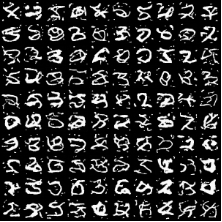
New research reveals a groundbreaking insight into the role of pseudorandom streams in enhancing the quality of diffusion models. Conducted by researchers from the Harbin Institute of Technology and Northeastern University, this study sheds light on how the structured nature of pseudorandom inputs can significantly impact the training and output of neural networks.
The Power of Pseudorandom Structures
Diffusion models, widely used in machine learning tasks such as image generation, inherently rely on randomness to function optimally. However, the randomness employed in these models is often deterministic, generated through pseudorandom number generators (PRNGs). This research investigates whether different pseudorandom orbits contain structures that neural networks can recognize and utilize, potentially affecting the model's ability to learn and generate.
The study indicates that varying the pseudorandom orbit can lead to different outputs, ranging from well-defined images to non-recognizable textures. It highlights that accessible orbit structures can act as learnable inputs, contributing to a model's overall efficiency and output quality.
Uncovering Predictability
A key aspect of the research involved using a multilayer perceptron (MLP) to predict the next value in a sequence generated from the current orbit history. This predictive ability is crucial because it indicates how much information the model can derive from the provided pseudorandom input. The findings suggest that certain orbits are more predictable than others, leading to superior model performance in image generation tasks.
Additionally, the researchers developed a diffusion probe to measure whether the diffusion model could effectively leverage these orbit structures. This probe consistently showed that orbits composed of pseudorandom values could lead to higher training objectives and result quality, further emphasizing the importance of orbit selection in achieving desirable outcomes.
Empirical Power Laws: A Game Changer?
One of the standout findings of this research is the establishment of an empirical power law linking the performance of the diffusion probe to real-data diffusion loss. This relationship indicates that the effectiveness of different pseudorandom streams is not merely based on their statistical properties but also significantly depends on the model architecture and training protocol employed.
The researchers demonstrated that after controlling for basic statistics, the loss incurred from the diffusion probe closely follows a power-law relationship with actual diffusion losses on both MNIST and CIFAR-10 datasets. This correlation suggests a deeper, more intricate relationship between the model's training process and the type of random input it receives.
Broader Implications and Future Research
The implications of these findings extend beyond diffusion models, inviting future exploration into how other artificial intelligence systems can leverage the structured properties of pseudorandom sequences. The researchers advocate for broader validation across various generator families and model architectures to fully comprehend the significance of random-source design in machine learning.
This innovative research lays the groundwork for new methodologies that might enhance machine learning models by using thoughtfully designed pseudorandom streams, potentially revolutionizing practices in fields ranging from image synthesis to advanced data simulations.
As we continue to unravel the complexities of machine learning, understanding the role of random inputs could very well pave the path for superior AI performance in the future.
Authors: Deng Shengzhi, Ye Chenqi, Guo Yanze




