
Monitoring Robotic Intelligence: Unveiling Progress Probes for Reliable Vision-Language-Action Models
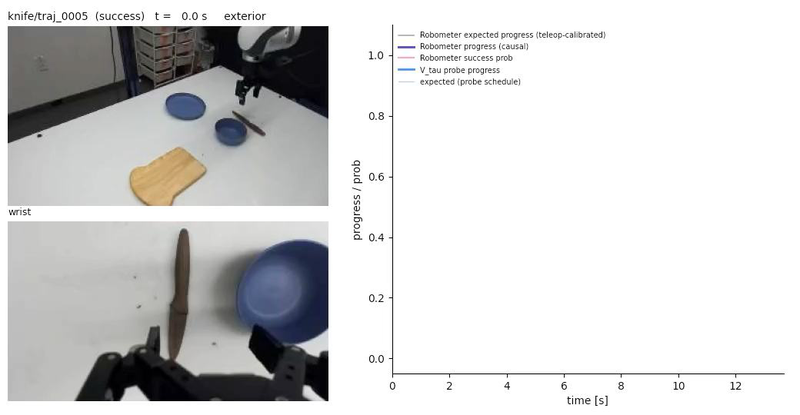
The landscape of robotics is rapidly evolving with the integration of sophisticated models that combine visual perception, language understanding, and action execution. A cutting-edge research paper titled "Progress Probes P2: Lightweight Runtime Monitoring for Vision-Language-Action Models" dives deep into improving the reliability of these Vision-Language-Action (VLA) models. Researchers Atiksh Bhardwaj, Edward W. Duan, and others present a transformative approach that enables these robotic systems to monitor their own progress effectively.
The Challenge with Vision-Language-Action Models
While VLAs like π0.5 and GR00T have significantly progressed in executing multi-stage tasks from visual cues and natural language instructions, they are not without flaws. They exhibit unpredictable failure modes due to poor language grounding and other issues, which makes it challenging to deploy these technologies autonomously. Existing methods to monitor these failures often rely on complex systems that introduce additional computational overhead. Here’s where the innovative concept of progress probes comes in.
Introducing Progress Probes: A Game-Changer in Runtime Monitoring
The central idea behind Progress Probes is simple yet powerful: can we leverage the model's internal activations to gauge its progress through tasks? The researchers trained linear probes on the internal activations of the VLA, enabling direct estimation of how far the model has progressed. This internal monitoring system not only reduces the dependency on external models—which are often cumbersome and resource-intensive—but also runs at a remarkable speed of up to 20,000 times faster than traditional methods.
Experimental Success: Probes Outperform Conventional Methods
In a series of experiments, the researchers tested their method on both simulated environments and real-world tasks. The outcomes were promising. The progress probes demonstrated competitive effectiveness in detecting task failures and exhibited performance on par with or better than other commonly used methods like Robometer and SAFE. Notably, the probes managed to operate solely on successful execution data, eliminating the need for additional failed-case datasets.
A Leap Towards Autonomous Robotics
The implications of this research extend far beyond just understanding task progress. By enabling robots to self-monitor their progress, this technique paves the way for a new era of autonomous systems capable of operating independently and efficiently. The findings illustrate that internal representations can be harnessed for effective monitoring, reducing reliance on heavy external validation systems.
The Future of Robotics: Broader Applications and Insights
The authors emphasize the need for further studies to generalize the progress probe method across different VLA architectures. As robotic systems become increasingly integral to various sectors, from manufacturing to service industries, ensuring their reliability through innovative self-monitoring techniques is essential. This research not only supports that goal but also opens doors for future developments in real-time monitoring and adaptation of robotic behaviors.
In conclusion, Progress Probes represent a significant stride towards making robot policies more dependable. By tapping into their own internal signals, VLAs can now more effectively manage their tasks and navigate complexities in real time.
Authors: Atiksh Bhardwaj, Edward W. Duan, Junwon Seo, Prithwish Dan, Wei-Chiu Ma, Andrea Bajcsy, Preston Culbertson


