
Microalgae Take to the Skies: The Surprising Role of Sea Spray in Airborne Toxin Transmission
A new study sheds light on the relationship between microalgae and airborne toxins, revealing that these tiny organisms can hitch a ride on sea spray, potentially aggravating respiratory issues in coastal communities during harmful algal blooms. Conducted by researchers from multiple institutions, including Sorbonne Université, this research highlights the mechanisms behind airborne microalgal cells and their implications for public health.
The Alarming Connection between Microalgae and Respiratory Health
The authors of the paper provide compelling evidence that certain species of microalgae, particularly Ostreopsis cf. ovata, can aerosolize in sea spray during algal blooms. These blooms can produce potent toxins that may lead to respiratory distress in beachgoers and local populations. For instance, the study found that significant concentrations of microalgae were detected in the air during a bloom in the Basque Country, suggesting that communities could unknowingly inhale these toxic particles.
How Are Microalgae Captured in Sea Spray?
The research team developed a novel particle capture model to understand how microalgae are aerosolized. Traditionally, models focused on surface effects, but the new findings indicate that hydrodynamic processes play a crucial role. When bubbles burst at the ocean surface, they create a jet of water that can carry larger particles, like microalgal cells, into the air. The study classified these particulate captures into two regimes based on the size and concentration of the algal cells, uncovering a unique enrichment factor that challenges previous models.
Field Observations and Laboratory Experiments
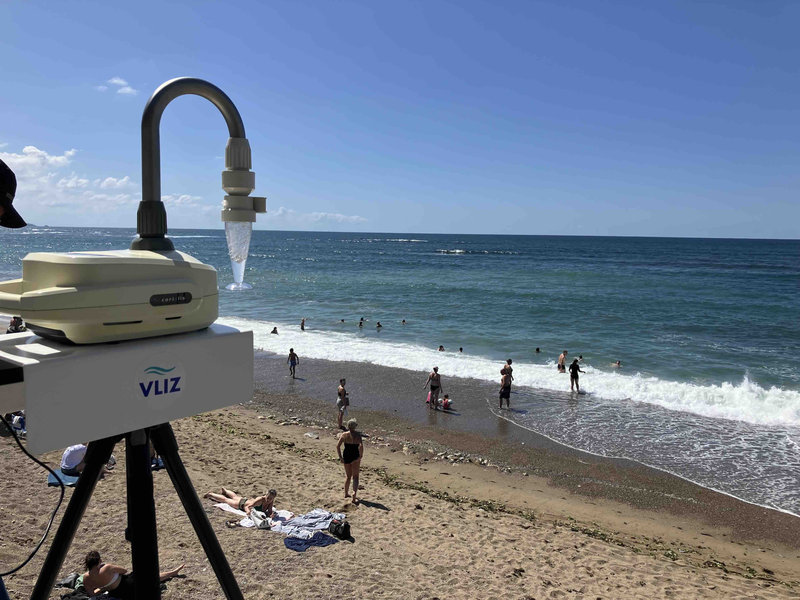
Field experiments involved collecting air samples during an algal bloom, confirming the presence of intact and ruptured microalgae in the air. Laboratory analyses used microalgae from various species to further demonstrate the mechanisms of aerosolization, supporting the notion that microalgae are not passive particles but can actively contribute to airborne toxic levels.
Implications for Coastal Communities and Future Research
The implications of this study are significant, as it not only contributes to our understanding of ocean-atmosphere exchanges but also emphasizes the need for continuous monitoring and research on harmful algal blooms. As climate change continues to influence the frequency and intensity of these blooms, understanding the aerodynamics of microalgae can help develop public health strategies to mitigate respiratory illnesses associated with toxic exposure.
In conclusion, this groundbreaking research enhances our understanding of how microalgae can become airborne toxins, posing a potential risk to human health, especially in coastal regions. The findings urge scientists and public health officials to prioritize the study of airborne microalgae in future research.
Authors: Elettra Fig`a Talamancaa, Juliette Pierrea, Eva Ternonb, Paula Cohenb, Maarten De Rijckec, Hélène de Malepradea


