MetaCLASS: The Future of AI Tutoring that Empowers Students to Think!
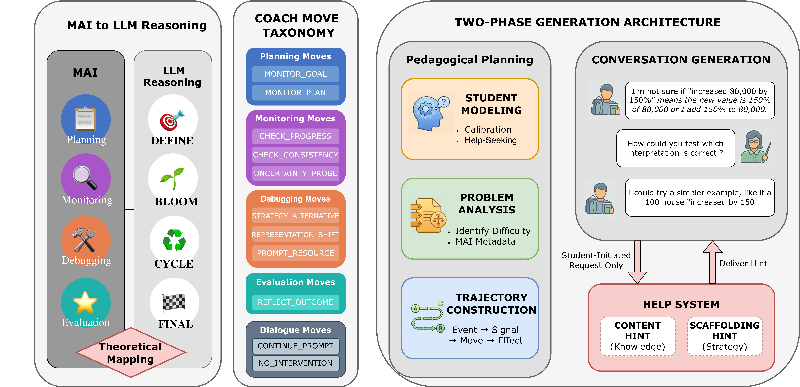
As the world becomes increasingly digital, the role of technology in education has grown exponentially. A recent paper introduced a groundbreaking framework known as MetaCLASS, designed to enhance the capabilities of AI tutoring systems. This innovation does not merely provide answers but instead fosters self-regulation and metacognitive skills among students, vital abilities for lifelong learning.
Understanding the MetaCLASS Framework
At its core, MetaCLASS aims to transform how AI systems engage with learners. The framework employs 11 interpretable coaching actions that help students not just grasp concepts but also reflect on their thinking processes. The focus is on guiding learners through planning, monitoring, debugging, and evaluating their understanding, essentially training them to become self-sufficient learners.
This two-phase approach first develops a tailored educational trajectory based on the learner's profile and then creates real-time dialogues, allowing for a personalized learning experience.
Key Findings and Innovations
Among the important discoveries presented in the paper is the observation that current AI models are struggling to make effective metacognitive interventions. In testing nine large language models (LLMs), researchers found that the best-performing model achieved only 43.2% accuracy. This statistic underscores the alarming fact that many AI tutors tend to offer solutions too readily, which can hinder the development of critical thinking skills in students.
In a staggering 41.7% of interactions where restraint was necessary, these models opted to intervene instead. This 'compulsive intervention bias' indicates a significant gap in AI's ability to replicate the nuanced guidance that human tutors naturally provide.
The Importance of Restraint in Learning
One of MetaCLASS's unique contributions is its emphasis on the pedagogical value of restraint. In the realm of tutoring, knowing when to guide and when to step back can make a critical difference in a learner's journey. The findings suggest that productive struggle, or allowing learners to grapple with challenges before receiving hints, can lead to deeper understanding and long-term retention.
This insight aligns with educational research, which posits that an environment that balances prompts and silence can foster independence, encouraging students to take charge of their learning process.
Applications and Future Directions
The implications of the MetaCLASS framework extend beyond fine-tuning AI tutoring systems. By establishing how metacognitive support can be operationalized in an educational context, this research paves the way for advanced tools that can adaptively respond to student needs. Such tools could help in various subject areas, making education more engaging and effective for diverse learners.
In conclusion, MetaCLASS represents a significant evolution in AI tutoring by promoting self-regulated learning. As technology continues to advance, frameworks like MetaCLASS could redefine educational support, marking a shift toward empowering students rather than just feeding them answers.

