Is Time Just a Construct? Unraveling the Illusion of Synchronized Clocks
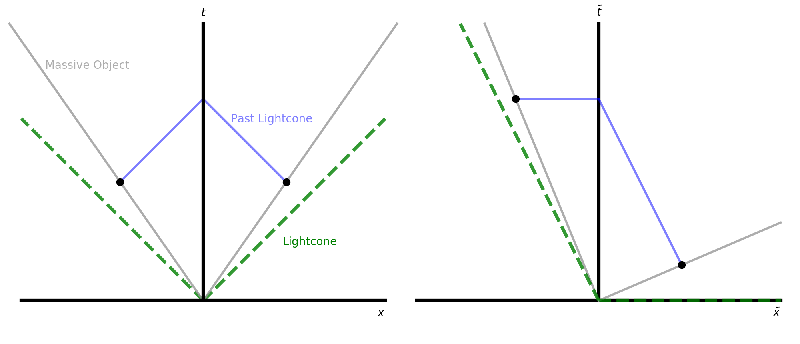
In an era where precision is paramount, the quest for synchronized time extends beyond mere convenience. Paul Borrill's provocative research paper, "Why Synchronized Time is a Fiction," challenges our very understanding of timekeeping by arguing that global synchronized time is merely a social convention rather than a physical certainty. This idea compels us to reconsider the myriad systems and protocols established to maintain this "false reality."
The Myth of Coordinated Universal Time
Borrill begins by dissecting our reliance on conventional timekeeping methods, such as daylight saving time, leap seconds, and the highly accurate atomic clocks used in GPS. As he points out, these systems are all predicated on an assumption: that there exists an absolute, universal time that clocks can agree upon. However, this thesis is fundamentally flawed.
According to Borrill, both special and general relativity dismantle the notion of absolute simultaneity. Events that may appear simultaneous from one perspective could unfold differently from another. These revelations reveal the inadequacy of synchronized time as a concept—what we think of as 'correct' time is not a universal truth but rather a social construct designed to keep our daily lives on track.
Daylight Saving Time: A Visible Example of Convention
The paper highlights daylight saving time as a blatant example of our reliance on conventions. When clocks are set ahead or back by one hour, nothing in nature changes; the Earth continues its rotation as usual. The clock adjustment is an arbitrary act, a societal agreement that serves to rearrange our schedules rather than reflect any fundamental change in time itself.
Borrill emphasizes that the same applies to the concept of leap seconds. Introduced to keep Coordinated Universal Time (UTC) within one second of astronomical time, leap seconds do not correct a measure of error but instead point toward our flawed understanding of time as a linear, unified concept. In effect, they reveal that these adjustments act as mere corrections to conventions rather than indicators of physical discrepancies.
Rethinking Time: Causality Over Conventions
Moving beyond traditional paradigms, Borrill suggests a shift towards embracing causal relationships rather than attempting to enforce a singular, synchronized time. This shift could pave the way for more coherent systems in computing and scientific inquiry, where events are linked by mutual dependence instead of rigidly defined timestamps. This perspective aligns closely with phenomena observed in cutting-edge quantum research, which indicates that nature itself may not operate along the linear time scales that humans have constructed.
In this sense, he advocates for a reconsideration of systems designed around causal semantics rather than temporal coordination, encouraging a movement away from the quest for perfect synchronization toward an understanding that embraces uncertainty and complexity.
Conclusion: The Implications for Our Understanding
Ultimately, Borrill’s argument serves as a profound reminder that the structures we have created around timekeeping may be more about maintaining social order than they are about measuring an objective reality. By recognizing the illusory nature of synchronized time, we may find ourselves questioning other deeply entrenched concepts and practices that govern our lives. The assertion that ‘there is nothing to execute’ when attempting to synchronize our clocks invites a rich dialogue on the philosophy of time and its implications for various fields, from physics to technology and beyond.
In a world increasingly defined by precision and accuracy, this contemplation of time as a social construct rather than a physical certainty could reshape our approach to technology, interpersonal relationships, and our understanding of the universe itself.
Authors: Paul Borrill

