
Introducing JanusMesh: The Groundbreaking Method Creating Dual-Semantic 3D Illusions in Minutes!
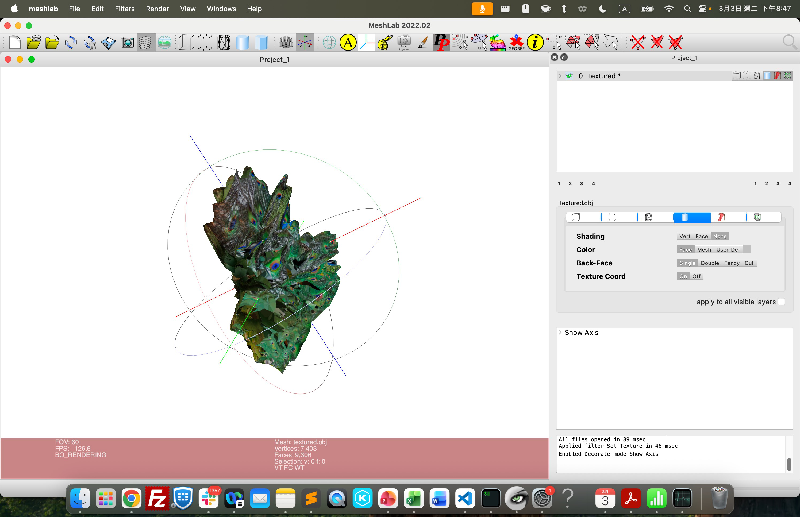
In a remarkable leap forward for 3D visual technology, researchers from the National Yang Ming Chiao Tung University have unveiled JanusMesh, an innovative framework that generates stunning three-dimensional objects with contrasting semantics when viewed from different angles. This cutting-edge solution not only streamlines the 3D illusion generation process but does so at an astonishing speed of just 3 to 5 minutes, compared to traditional methods that often require up to 40 minutes.
The Challenge of 3D Visual Illusions
Visual illusions have long captivated audiences by twisting our perception of reality. Creating a single 3D object that presents entirely different images depending on the viewer's perspective, such as a peacock from one angle and a pineapple from another, is an intricate artistic challenge. Traditional methods often rely on slow optimization processes or result in visually jarring seams and color oversaturation, falling short of delivering seamless experiences.
A Two-Stage Revolutionary Framework
JanusMesh stands out due to its fast, training-free two-stage architecture. The first stage employs a dual-branch denoising process that utilizes a technique called cross-space blending. This method dynamically decodes three-dimensional representations into a voxel space, ensuring smooth transitions between the different shapes while maintaining geometric integrity. The second stage focuses on view-conditioned texturing, where the system efficiently applies specific textures based on the camera angle, leading to realistic and coherent dual-semantic 3D meshes.
Efficiency and Performance
In extensive testing, JanusMesh has proven to be significantly more efficient than existing models. It outperforms traditional methods in various metrics, including geometric coherence and semantic recognizability, all while completing tasks in a fraction of the time. The results exhibit high-quality realism across various shapes, making it an exciting tool for artists, designers, and developers looking to create engaging 3D content.
Real-World Applications and Future Prospects
The practical implications of JanusMesh are enormous, paving the way for advancements in fields ranging from gaming and entertainment to education and marketing. By providing a means to generate complex visual illusions quickly and accurately, the technology opens doors for new interactive experiences and creative expressions.
With JanusMesh, researchers hope to extend its capabilities to handle multiple objects and create more intricate illusions that challenge how we perceive three-dimensional space. The ongoing research signifies a promising future for visual technology and offers an engaging glimpse into the fascinating world of computational art.
For more information about this groundbreaking work, visit their project page at JanusMesh Project Page.
Authors: Siang-Ling Zhang, Huai-Hsun Cheng, Tsung-Ju Yang, and Yu-Lun Liu




