
Humanoid Robots Learn to Navigate Complex Terrains with Remarkable Precision: A Breakthrough in Robotics
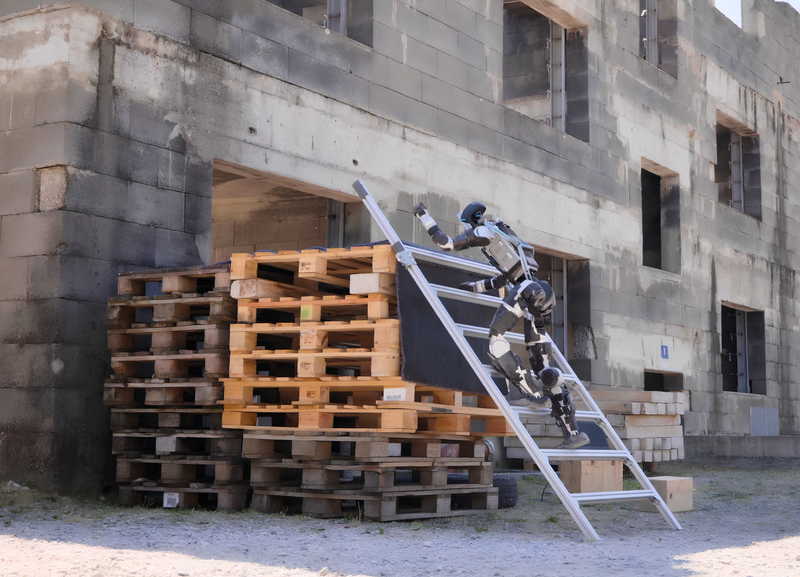
A research team at ETH Zurich has unveiled a revolutionary framework for humanoid robots, enabling them to traverse complex terrains with impressive agility and precision. This development not only enhances the robot's ability to adapt to various environments but also employs innovative training methods to refine movement and contact planning.
The Challenge of Humanoid Mobility
For humanoid robots, successfully navigating cluttered and uneven terrains entails more than simply walking. It requires accurate foot placements and the ability to coordinate whole-body movements to overcome obstacles like uneven floors and low walls. Previous methods often relied heavily on pre-defined trajectories or extensive training data, which made adaptation to new environments a significant challenge.
Bridging Two Approaches
The ETH Zurich researchers introduced a unique learning framework that marries two conventional methods: reinforcement learning (RL) and reference-based motion imitation. The key innovation here lies in using motion data as a training prior instead of a rigid guide. This allows the robots to learn from past successful movements while maintaining the flexibility to explore and adapt to new challenges autonomously.
Attention-Based Contact Planning
The new system incorporates an attention-based contact planner that predicts where the robot's body should make contact with the environment. By focusing on contact points and building a contact-aware structure of locomotion, the robot can effectively make real-time decisions on movement, allowing it to adapt to terrains it has never encountered before. This abstraction decouples the planning of contacts from the overall motion, granting the robot more freedom in executing its path.
Real-World Applications and Testing Results
The team tested their unified policy on the Unitree G1 humanoid robot across diverse outdoor and indoor terrains. The results were impressive: the robot was able to execute complex movements including climbing up and down stairs, vaulting over obstacles, and adapting its movements based on real-time environmental observations without relying on pre-existing motion data. Notably, the robot demonstrated the ability to recover from falls and make repeated attempts to regain stability, showcasing an unexpected level of robustness in unpredictable environments.
Future of Humanoid Robotics
This framework represents a significant step forward in humanoid robotics, marrying advanced programming techniques with practical training methodologies. The potential applications are vast—from search and rescue missions in difficult terrains to assisting humans in everyday activities, the ability for robots to adapt and coordinate in real-time can redefine how we interact with machines in our daily lives.
Overall, the research conducted by Junzhe He, Kehan Wen, Chong Zhang, and their colleagues has laid the groundwork for the next generation of humanoid robots that can move beyond the limitations of previous technological frameworks and excel in dynamic and complex environments.
For more detailed insights, refer to the original research paper titled "Humanoid Mobility via Attention-based Contacts."
Authors: Junzhe He, Kehan Wen, Chong Zhang, Clemens Schwarke, Zewei Zhang, Kaixian Qu, Siyuan Hu, Matthias Müller, Vladlen Koltun, Marco Hutter


