
How Speculative Trading is Shaping the Future of Great Britain's Electricity Market
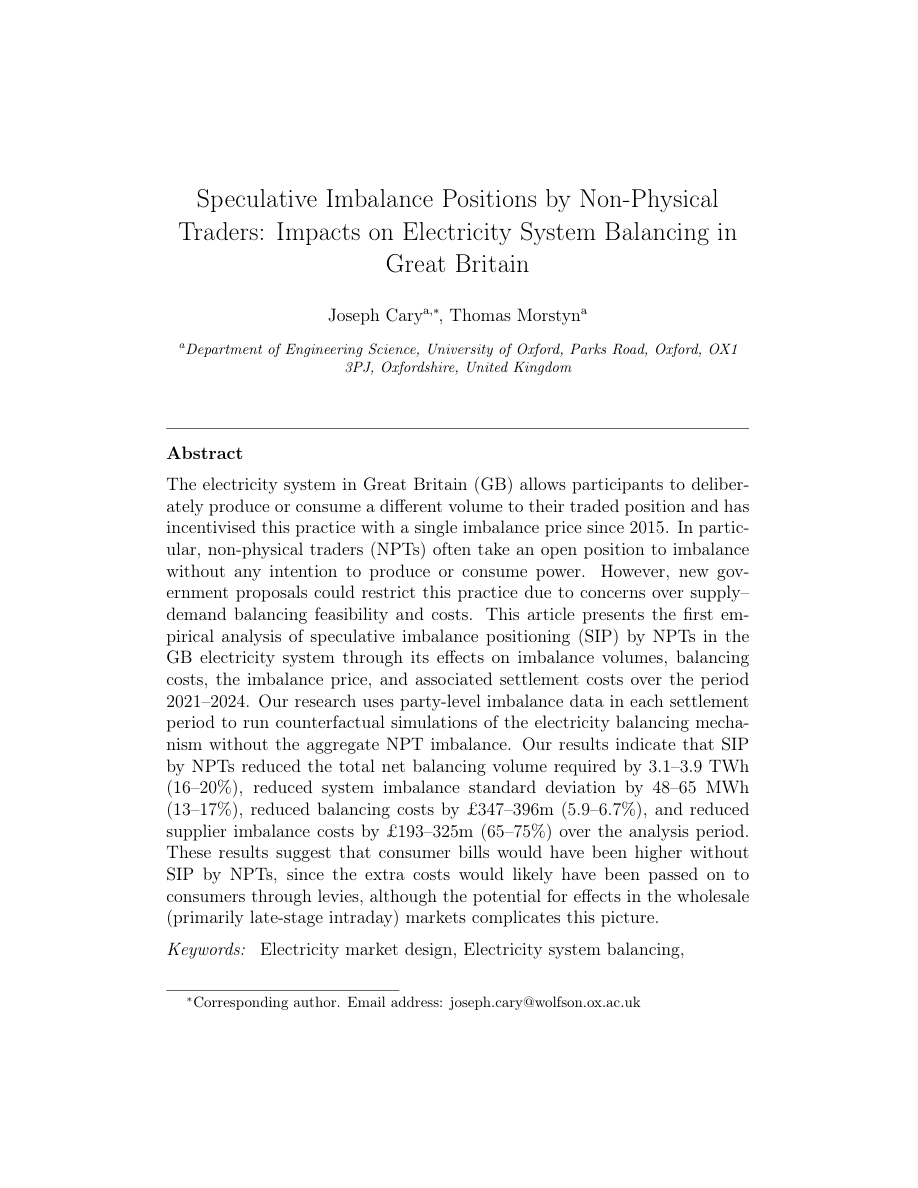
A recent study by researchers Joseph Cary and Thomas Morstyn has revealed significant insights into how non-physical traders (NPTs) are impacting the balancing of the electricity system in Great Britain (GB). These traders, who operate without any physical connection to the power supply, engage in speculative imbalance positions (SIP) that can influence market dynamics and costs for consumers.
The Role of Non-Physical Traders
Since the introduction of a single imbalance price in 2015, NPTs have been allowed to take encouraged speculative positions with the aim of enabling a more fluid and balanced electricity market. Now, this fresh research provides the first empirical evidence that these speculative positions have led to a notable decrease in system imbalances across the GB electricity landscape.
Key Findings: A Closer Look
The study showed that SIP contributed to a 16-20% reduction in the total absolute imbalance volume, equating to 3.1 to 3.9 Terawatt-hours (TWh) over three years (2021-2024). This reduction in imbalance volume not only leads to enhanced market efficiency but also saved consumers an estimated £347 to £396 million in balancing costs.
Furthermore, the analysis revealed a massive 65-75% decrease in imbalance charges imposed on suppliers, suggesting that lower balancing costs are likely being passed on to consumers in the form of reduced bills.
Implications for Policy and Market Dynamics
The implications of these findings may reach far beyond the current electricity market framework. As discussions continue regarding government proposals to restrict speculative trading due to concerns about supply-demand balancing, this research provides essential evidence that SIP by NPTs should be regarded as beneficial rather than detrimental to the GB electricity system.
With pressures for energy systems worldwide to adapt to increasing renewable energy generation, the role of NPTs and their SIP strategies may offer vital lessons and methodologies to improve energy market fluidity and consumer cost efficiency.
Conclusion: Navigating the Future
As policymakers contemplate reforms in electricity balancing and trading strategies, understanding the significant benefits that speculative imbalance positions create is crucial. The results from Cary and Morstyn's study highlight not only the effectiveness of NPTs in achieving balance within the GB electricity system but also the potential cost savings for consumers, ultimately underlining the importance of maintaining a space for speculative trading within energy markets.
With evolving market conditions and the need to manage a growing portfolio of renewable energy sources, the findings from this research may prove essential for future market designs, offering pathways that benefit both traders and consumers alike.
Authors: Joseph Cary, Thomas Morstyn


