
How Bio-Inspired Auditory Processing is Set to Revolutionize Speech Recognition with stGRU
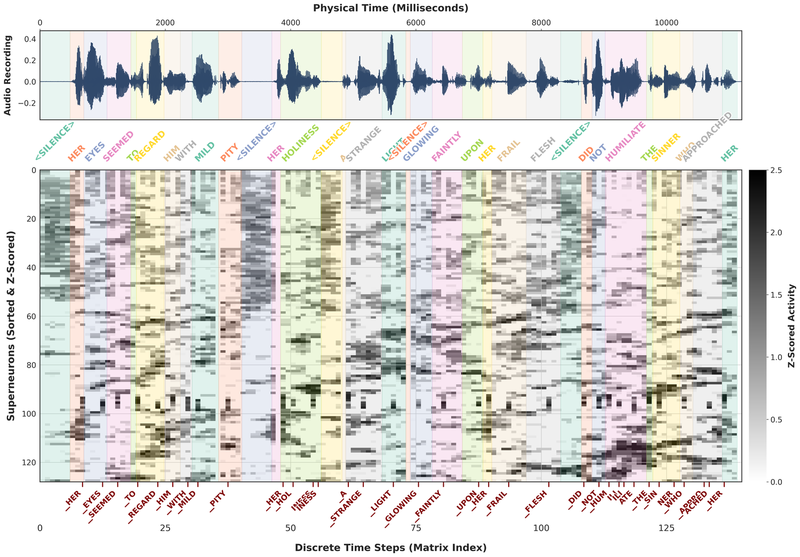
A groundbreaking research paper introduces a new approach to automatic speech recognition (ASR) by leveraging bio-inspired auditory processing techniques. The study, conducted by a team from prestigious institutions, presents a model called the Spiking Ternary GRU (stGRU). This innovative architecture merges insights from neuroscience with the latest advancements in machine learning, paving the way for more accurate and energy-efficient speech recognition systems.
The Challenge with Traditional Neural Networks
Traditional deep learning models for speech recognition have demonstrated impressive performance, but they rely heavily on dense, floating-point calculations, which require a significant amount of energy and memory. The main bottleneck in these models is often the Leaky Integrate-and-Fire (LIF) neuron, which struggles to effectively retain information during pauses in speech and across boundaries of phonemes.
Introducing the stGRU: A Breakthrough in Speech Processing
The researchers propose stGRU, a bio-inspired architecture that combines spiking neural networks with ternary-weighted gated recurrent units. This innovative design allows the model to conduct temporal filtering while simultaneously generating a binary spike stream to facilitate efficient data processing.
By utilizing ternary weights—representing values as -1, 0, or +1—the stGRU significantly reduces memory consumption without sacrificing accuracy. The model, trained on the LibriSpeech dataset, achieves an outstanding word error rate (WER) as low as 6.44%, a remarkable feat for a system that avoids standard matrix multiplication routines typically associated with ASR models.
Synergy Between Neuroscience and Machine Learning
What's particularly fascinating is the architecture's reflection of biological processes. The design mimics how biological neural networks function, with specialized shallow layers processing fast acoustic features and deeper layers integrating slower semantic information. This duality not only enhances performance but also allows for better interpretability of the network's internal dynamics.
Notably, during the training phase, the internal networks develop functions akin to human auditory processing areas, such as error-monitoring mechanisms found in the anterior cingulate cortex (ACC) and confidence-signaling seen in the prefrontal cortex (PFC).
Energy Efficiency: A Game Changer for Edge Computing
Another striking aspect of the stGRU model is its energy efficiency. The architecture operates at significantly lower energy costs compared to conventional dense models. By avoiding costly floating-point matrix multiplications, the stGRU can be deployed in energy-constrained environments, making it a promising solution for applications like mobile devices, smart home assistants, and other voice-interactive technologies.
The Future of Speech Recognition
This research not only pushes boundaries in the field of speech recognition but also sheds light on the potential of combining computational neuroscience with machine learning. The stGRU model represents a significant step forward in creating speech recognition systems that are not only more efficient but also reflect the complexity of human auditory processing in a way that is interpretable and practical. The team’s approach may set the stage for the next generation of intelligent voice-responsive systems that could reshape human-computer interaction.
As researchers continue to refine these models and explore their applications, we may see breakthroughs that were previously thought impossible, ushering in a new era of communication technology.
Authors: Pavlos Poulos, Katelyn Sadorf, Themos Stafylakis, Costas A. Anastassiou


