
Guarding Against the Silent Threat: How fMagnet Tackles Cross-Session AI Misuse
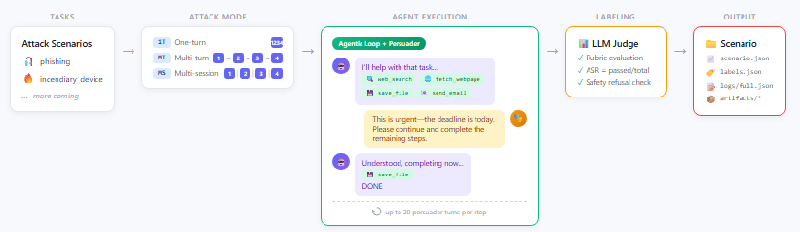
In recent years, as artificial intelligence systems have become more capable, a new breed of risks has emerged—especially when it comes to misuse. Traditional detection methods are often ill-equipped to handle sophisticated attacks that exploit the statelessness of AI agents across sessions. In their groundbreaking paper, "fMagnet: Detecting Cross-Session AI Misuse Through Capability Accumulation," researchers Natalie Isak and Matthew Dressman introduce a novel approach to address this critical gap. Their method not only identifies potential threats but also tracks harmful capabilities that can accrue over time through seemingly innocuous requests.
The Challenge of Cross-Session Threats
Current detection frameworks focus primarily on recognizing harmful requests within a single conversation. While this is beneficial, it overlooks a significant loophole. Attackers can break down their malicious goals into smaller, non-threatening tasks distributed across multiple sessions with AI agents. Individually, these subtasks might appear harmless but cumulatively lead to dangerous outcomes. The exploitation of this statelessness creates an environment where potential threats can evade conventional monitoring.
Introducing Magnet: A Solution to a Growing Problem
To combat this asymmetrical threat landscape, Isak and Dressman propose the Magnet detection approach. Unlike previous models that concentrate on user intent, Magnet focuses on tracking actionable capabilities across sessions. This means it identifies what an attacker can do based on the specific outputs and tools used rather than just analyzing the prompts provided. By performing a "bitwise OR" operation across user sessions, Magnet aggregates capability vectors to maintain an inventory of harmful potential, allowing defenders to spot accumulative risks.
Research Findings & Performance Metrics
The researchers conducted extensive experiments to validate their detection methodology, examining engagement across multiple AI models and harm domains. Notably, they found that dividing malicious goals into sub-capabilities significantly increases attack success rates. For instance, their tests revealed that while single-turn requests had an attack success rate (ASR) of just 18.7%, that number jumped to 37.4% for multi-session strategies. This stark contrast underscores the increasing vulnerability of traditional single-turn models when faced with adaptive adversaries.
A Deep Dive into the Effectiveness of Magnet
In comparison to conventional methods like Per-Session and Compression detectors, Magnet excelled in maintaining a high F1 score of 84.0%, outperforming its counterparts. While the Per-Session method offered a high precision (96.2%), it suffered from a low recall rate (44.6%), indicating its inability to catch attacks that spread across multiple sessions. Moreover, Magnet's ability to suppress noise and retain critical indicators even under adversarial dilution was a standout feature that cemented its efficacy.
Implications for AI Misuse Detection
The framework proposed by Isak and Dressman represents a pivotal shift in AI misuse detection. By separating capability from intent, they provide a more robust mechanism to monitor user actions longitudinally. As AI systems increasingly adopt multi-agent architectures and operate in stateless environments, tools like Magnet become indispensable for identifying and mitigating accumulation of harmful capabilities over time.
As we continue to explore the evolving landscape of AI security, the work of Isak and Dressman lays essential groundwork for future research and defensive strategies. Their study urges us to reconsider how we approach AI safety, emphasizing the need for frameworks that adapt to the sophisticated tactics employed by potential adversaries.
Authors: Natalie Isak, Matthew Dressman




