
FlexPart: Transforming Image Inputs into Dynamic 3D Models with Unmatched Precision
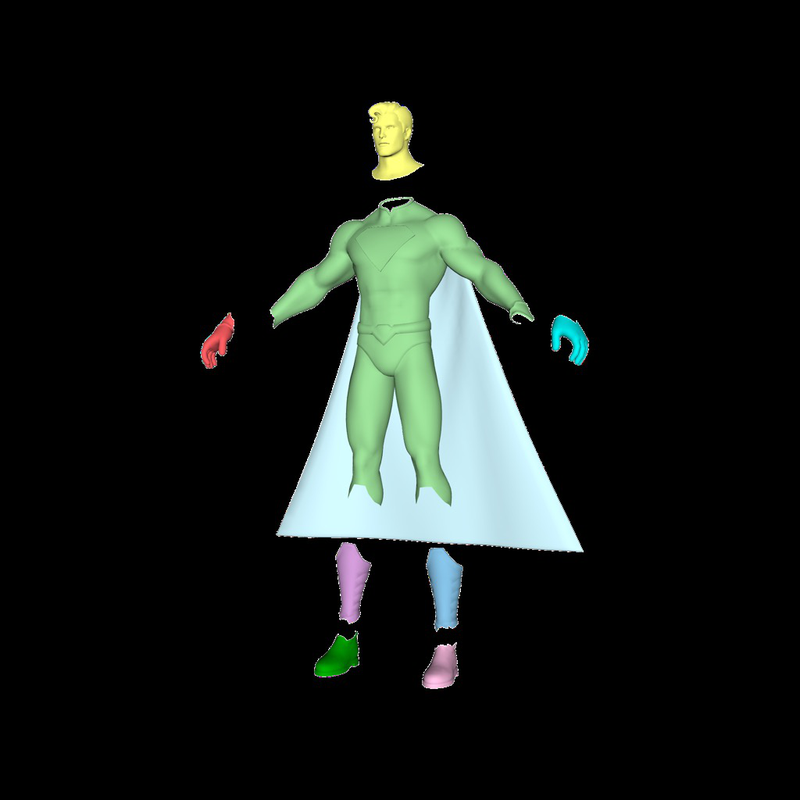
A groundbreaking new research paper introduces FlexPart, a revolutionary framework that advances the field of image-to-3D part generation. This unified approach allows users to create dynamic 3D objects from images with varying levels of control—from detailed masks to simple sparse points—providing an unprecedented augmentation of creative possibilities in digital asset design.
The Challenge of 3D Generation
Creating 3D models from 2D images has long posed a significant challenge for designers and developers. Traditional systems typically depend on rigid input conditions that lack flexibility, limiting their ability to cater to diverse user workflows. FlexPart addresses these limitations by enabling a seamless interplay between different types of geometric prompts, allowing users to effortlessly navigate between various levels of detail.
Unlocking Cross-Modal Synergy
With FlexPart, users can integrate sparse points, bounding boxes, and dense masks into a single model using a technique called gated adaptive modulation. This integration allows for a rich interactivity that not only simplifies the process but also enhances the accuracy of the generated 3D models. For example, by leveraging geometric guidance from more detailed inputs (like bounding boxes or masks), the system improves the handling of less-detailed sparse points.
Superior Performance Metrics
In tests against state-of-the-art methods, FlexPart yielded impressive performance improvements, achieving significantly reduced Part Chamfer Distance (Part CD) metrics compared to its competitors. Specifically, under mask conditioning, FlexPart improved its results by 16.6% relative to the previous best techniques, while also maintaining high fidelity in the reconstructed whole meshes. This advancement underscores the framework's versatility and effectiveness, even when provided with limited data.
Real-World Applications
The practical implications of FlexPart are vast. Its ability to produce high-fidelity, semantically coherent 3D parts enables applications across various domains, from video game development to virtual reality and educational simulations. Designers can customize models quickly, experiment with different geometries, and produce detailed assets that can significantly enhance user interactions.
Conclusion: A New Era in 3D Model Generation
FlexPart represents a significant leap forward in the realm of 3D generation from image inputs. By fostering a shared framework that simultaneously embraces multiple input types, it empowers creators to generate complex 3D structures efficiently and efficiently. As the digital landscape continues to evolve, tools like FlexPart are bound to redefine how users interact with and create 3D content.
Authors: {Qiwen Gu, Xin Zhou, Xiwu Chen, Zhongyang Zhu, Zhuo Zhang, Junqiao Zhao}


