
Exploring the Electromagnetic Form Factors of Vector Mesons: Insights from Einstein-Dilaton Holographic QCD
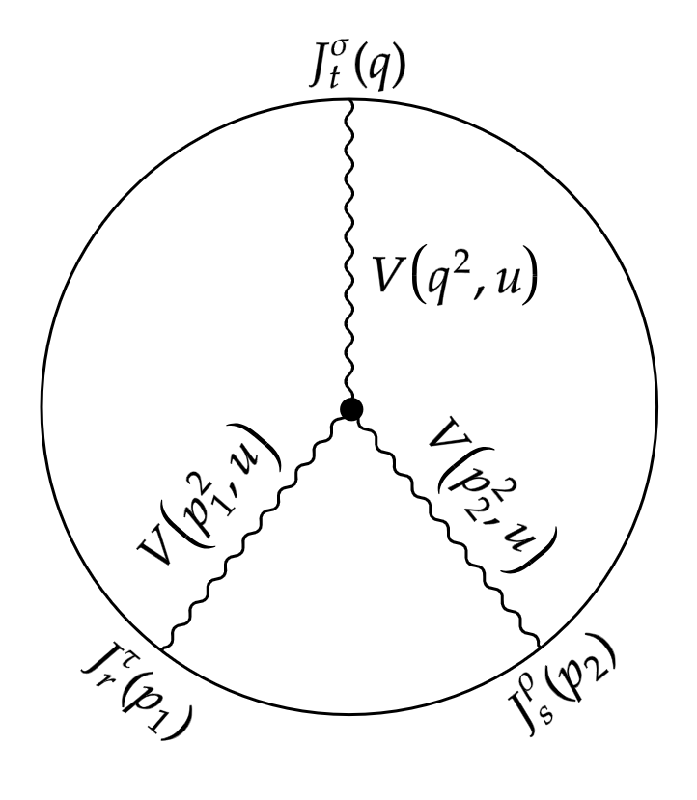
Recent advances in theoretical physics have brought forth intriguing models to describe the electromagnetic properties of mesons, which are fundamental particles made up of quarks. Among these models, a groundbreaking research paper explores the electromagnetic form factors of the ρ meson family within the frame of Holographic Quantum Chromodynamics (QCD) guided by Einstein-dilaton gravity. This innovative approach not only affirms certain predictions of existing models but also ventures into predicting previously uncalculated parameters, offering new avenues for understanding mesonic properties.
What Are Electromagnetic Form Factors?
Electromagnetic form factors are essential quantitative measures in particle physics, providing insights into the charge and magnetic distribution within hadrons, such as mesons. They are particularly crucial in evaluating how particles like photons interact with mesons. In simpler terms, these form factors help us understand the internal structure of mesons, revealing how their charge is spread out in space.
The Groundbreaking Model: Einstein-Dilaton Holographic QCD
The study utilizes an Einstein-dilaton holographic framework, a sophisticated theoretical method that melds gravity with gauge theory principles, enabling researchers to analyze strongly coupled particle systems like mesons. This model is lauded for its ability to simultaneously account for varioushadronic phenomena, providing a comprehensive picture of vector mesons.
Key Findings and Predictions
The researchers employed two methods to derive the electromagnetic form factors of the ρ meson family, achieving congruence with existing lattice QCD computations for elastic form factors. Notably, the elastic form factors exhibit behavior that adheres to predicted zero values at specific squared momentum transfers, an aspect supported by both light-front and Dyson-Schwinger calculations.
Moreover, the study introduces predictions for transition form factors which, unlike elastic form factors, have not yet been determined within lattice QCD settings, emphasizing the novel contributions of this research. The findings also establish a new sum rule linking meson masses and decay constants, enriching the theoretical landscape surrounding mesonic interactions.
Implications for Future Research
This research marks a pivotal step in our understanding of mesons, opening doors to further explorations into other hadronic channels and potential extensions into finite temperature and density conditions. Additionally, the ability to predict values for previously unknown transition form factors provides a vital benchmark for upcoming experimental validations.
Concluding Thoughts
In summary, this study not only reinforces the viability of the Einstein-dilaton holographic QCD framework but also propels the discourse in particle physics forward with its novel predictions and validation of established results. As researchers continue to unravel the intricate workings of mesons, insights gained from this model will undoubtedly influence future theoretical and experimental endeavors in the field.
Authors: Alfonso Ballon-Bayona, Tobias Frederico, Luis A. H. Mamani, Adão S. da Silva Junior, Wayne de Paula.




