
Exploring Legal Complexities: How Lexplorer is Redefining Legal Document Navigation
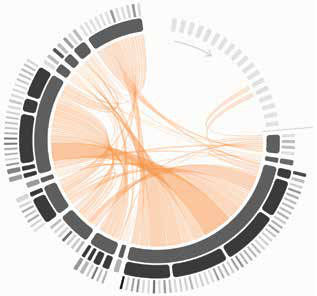
In a world where legal systems are constantly evolving and becoming increasingly complex, the need for innovative tools to navigate legal documents is paramount. Recent research has given rise to Lexplorer, a flexible interface that promises to change the way legal scholars interact with legal texts, offering tailored support for understanding and navigating the intricate relationships within legal documents.
The Challenge: Understanding Legal Complexity
The legal landscape is marked by a wealth of documents that are not only diverse but also interconnected, necessitating a sophisticated approach to legal research. Traditional methods of document retrieval often rely heavily on keyword searches and single-document access, limiting users’ ability to realize the full potential of document relationships. Insights from interviews conducted with 15 legal scholars revealed that existing legal information systems lack the features needed to support effective legal work, particularly as it pertains to Adaptive Meaning Construction (AMC)—a process where meaning in legal texts is constructed dynamically through interaction with various documents.
Lexplorer: An Innovative Solution
Lexplorer emerges from the need to facilitate AMC by allowing users to explore, navigate, and analyze legal documents efficiently. Designed through iterative user feedback and collaboration between visual-analytics researchers and legal scholars, Lexplorer is built to support nuanced interactions with legal texts. Utilizing a unique intent taxonomy, Lexplorer distinguishes between one, few, and many-document views, optimizing the user experience when analyzing interconnected legal documents.
Key Features Revolutionizing Legal Research
The design of Lexplorer includes several features that respond to the identified needs of legal scholars:
- Context-Sensitive Navigation: Lexplorer enables users to transition seamlessly between different document views, enhancing the comprehension of legal texts by exposing their intertextual relationships.
- Dynamic Version Control: Legal documents frequently undergo amendments. Lexplorer allows scholars to compare different versions easily, a crucial task for lawyers needing to understand how changes impact legal interpretations.
- Interconnected Document Display: By facilitating insights into how various documents relate to one another, Lexplorer positions itself as a powerful tool for legal analysis.
Evaluating Usability and Effectiveness
In evaluating Lexplorer through rigorous user studies with 20 legal scholars, it was shown that the system not only met the established requirements but also provided actionable insights into the design of interactive systems for the legal domain. Feedback highlighted that the Lexplorer interface supports meaningful exploration and comparison of legal documents, reinforcing its potential to assist in the complex task of legal analysis.
Conclusion: Paving the Way for Future Legal Technology
As we face an ever-growing array of legal challenges and regulations, Lexplorer stands as a noteworthy advancement in legal technology. By enhancing how legal scholars engage with documents, it empowers users to construct meaning from texts in a way that more traditional systems fail to achieve. This innovative approach to understanding legal complexity may serve as a model for future developments in legal technology across various jurisdictions.
As legal systems continue to evolve, tools like Lexplorer will be critical in supporting scholars and practitioners alike in navigating the increasingly intricate landscape of law.




