
Empowering Data Governance: How Contestable Agents Change the Game for AI-Driven Metadata Management
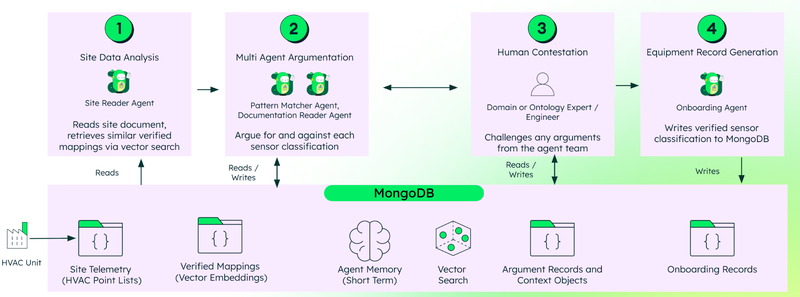
In the rapidly evolving landscape of industrial data governance, the integration of artificial intelligence (AI) signals a transformative shift. A new research paper introduces the concept of contestable governance, which seeks to bridge the gap between structured and unstructured metadata management through AI agents. This approach allows for enhanced accountability and improved decision-making processes in managing operational knowledge.
The Challenge of Managing Diverse Data
Industrial organizations increasingly rely on data from connected devices, generating both structured records (like telemetry) and unstructured sources (such as service notes). However, traditional governance programs handle these sources separately, which can lead to misclassifications and misinterpretations. The crux of the issue lies in the dependency on a select group of experts who must classify, document, and link these data sources effectively.
Enter Contestable Governance
The authors, Humza Akhtar and Brian Freeman, propose a novel concept called contestable governance. This framework equips AI agents with the ability to not only propose metadata but also generate cited arguments and raise quality concerns. This process ensures that human reviewers have the opportunity to contest decisions before they are finalized, creating a comprehensive recall of governance processes and decisions over time.
How It Works: The Workflow
At the heart of this system is a four-phase workflow:
- Data Analysis: AI agents analyze structured inputs, gathering relevant documents and past precedents.
- Multi-Agent Argumentation: Specialized agents provide supporting or opposing arguments based on evidence for each candidate class.
- Human Contestation: A steward can accept, reject, or modify these arguments, ensuring thorough scrutiny of proposals.
- Selection and Storage: The system selects the best-candidate decision and logs all evidence and arguments for future reference.
Real-World Applications: HVAC Use Cases
The research illustrates its relevance through two specific HVAC use cases. The first involves classifying installation points using standardized Brick Schema labels, while the second focuses on accurately tagging warranty failure modes across different systems. These examples demonstrate how the contestable governance framework can effectively resolve ambiguities and link disparate data sets, leading to enhanced reliability in monitoring and service.
The Future of Data Governance
This framework not only aims to improve accuracy and reliability in data classification but also proposes the introduction of checks and balances to track metadata decisions. With a versioned glossary and a promotion gate for verified records, organizations can protect themselves against the propagation of errors within their metadata systems. As organizations continue to integrate AI into their data processes, frameworks like contestable governance will be crucial in ensuring the integrity and accountability of automated decisions.
Ultimately, contestable governance stands as a potential game-changer in the realm of data management, promising to streamline workflows while maintaining rigorous oversight necessary for dependable AI-assisted governance.
Authors: {Humza Akhtar, Brian Freeman}


