
ElastiQP: The Game-Changer for Robot Control That Can't Miss a Beat!
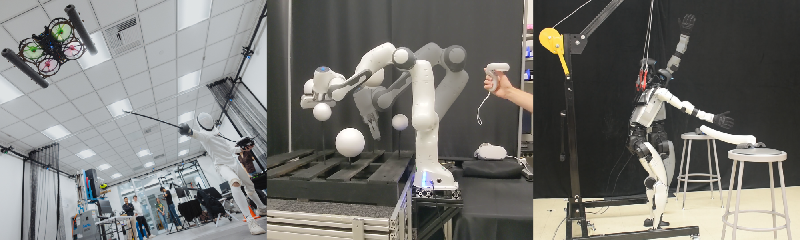
As robots become more complex, ensuring their safe and reliable operation, while managing numerous constraints, becomes crucial. Traditional methods often face issues, returning an "infeasible" status when momentary conflicts arise. Meet ElastiQP, an innovative Quadratic Programming (QP) solver designed to address this challenge and keep robots in motion even under conflict.
What is ElastiQP?
ElastiQP is a newly developed solver that modifies the dual active-set QP framework to introduce flexibility in how constraints are handled. Specifically, it uses a unique method to relax inequality constraints while keeping certain dynamics (equality constraints) hard. By employing an ℓ1 penalty system to relax constraints, ElastiQP allows robots to respond intelligently even when faced with conflicting demands, ensuring there’s always a viable control command available.
The Need for Reliable Control Systems
In robotics, QP-based controllers are indispensable for various tasks, such as maintaining stability and executing complex maneuvers. However, as robot capabilities grow, so does the complexity of the constraints they must obey. This leads to scenarios where constraints could conflict. Traditional solvers that declare a problem as "infeasible" leave robots with nothing to act upon, potentially leading to dangerous situations. ElastiQP aims to eliminate this issue.
How Does ElastiQP Work?
ElastiQP ingeniously combines the use of ℓ1 penalty terms with hard equality constraints. This means that rather than throwing in the towel when constraints clash, the solver adjusts dynamically, penalizing the least critical constraints while keeping vital commands intact. The result is a robust framework that not only maintains performance levels close to state-of-the-art but also excels in scenarios where other solvers falter.
Performance and Availability
On speed benchmarks, ElastiQP outperforms leading solvers by delivering usable solutions up to 40 times faster on difficult problems. It operates on microsecond-level performance, making it suitable for high-frequency deployments in real-time robot control systems. Best of all, its open-source nature encourages innovation, as it's available as a C++ header-only library with Python and JAX interfaces at GitHub.
Conclusion: A New Dawn for Robotics
ElastiQP represents a significant leap forward in the realm of constrained robot control. Its ability to maintain feasible commands even in the face of conflict is set to change how robots operate in dynamic environments. This research not only paves the way for safer, more reliable robot systems but also exemplifies the kind of innovative thinking needed to push the boundaries of robotics further.
For those in the robotics field, integrating ElastiQP could mean the difference between precision and peril, making it an essential tool for future developments.
Authors: Daniel Morton, Jon Arrizabalaga, Zachary Manchester, Marco Pavone




