
Discovering Cell Dynamics: How the Motile-Units Model Sheds Light on Polarization and Movement
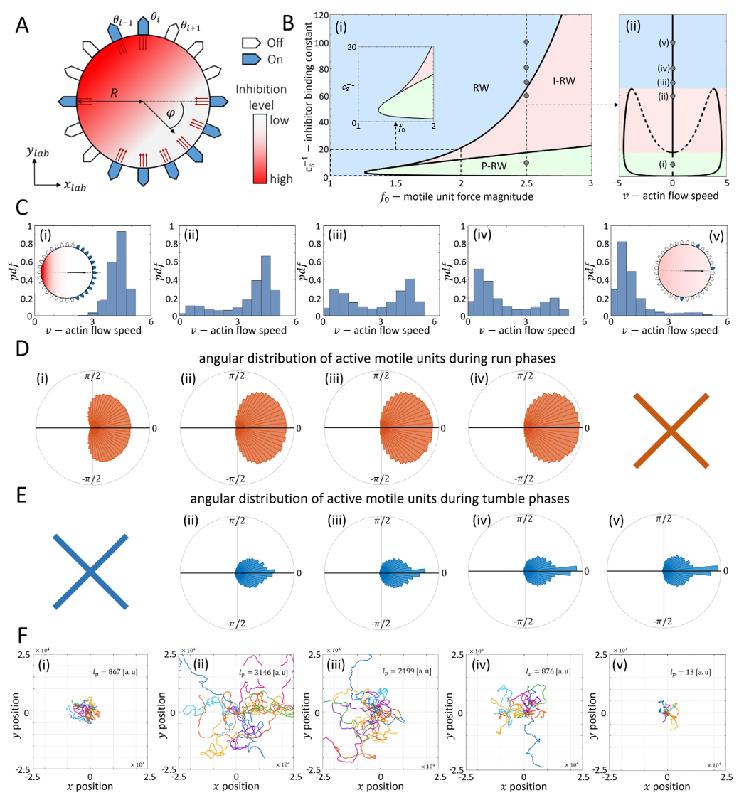
Recent research has unveiled a groundbreaking model known as the Motile-Units (MU) model, which offers insights into the intricate dynamics of cell polarization and motility. Led by Jonathan E. Ron and Nir S. Gov from the Weizmann Institute of Science, this research provides a simplified yet powerful framework to understand the mechanisms behind cellular movement.
What is the Motile-Units Model?
The MU model conceptualizes a cell's perimeter as a series of "motile units," which can toggle between active and inactive states. These units function similarly to binary spins, allowing researchers to simplify the complexity of cellular movement into discrete elements that exert forces and generate movement. When active, a motile unit produces a protrusive force pushing outward, enabling the cell to navigate through its environment.
Unraveling Cell Behavior
At the heart of the MU model is the interaction between these motile units and a polarity cue governed by actin retrograde flow. This dynamic creates three distinct phases of cell behavior: a random walk phase, a persistent random walk phase, and an intermittent bistable phase, drawing parallels to more complex forms of motility seen in nature.
Notably, the model demonstrates that the speed and direction of cell migration are not imposed but emerge organically from the interactions at the level of these motile units. This insight not only simplifies the study of cell dynamics but also opens avenues for understanding how cells make directional decisions in response to external stimuli.
Beyond Simplicity: Applications of the Model
The researchers illustrated the capabilities of the MU model by replicating phenomena such as chemotactic migration and directed movement in response to localized optogenetic activation. This adaptability highlights the model's potential for broader applications in biological research, particularly in studying complex interactions in dense cellular environments.
By providing a clear, minimally-complex representation of cell motility, the MU model enhances our understanding of how cells interact with their surroundings. The implications of this research stretch into fields ranging from cancer biology to tissue engineering, where understanding cell movement is crucial.
Conclusion
The Motile-Units model stands as a significant advancement in cell biology, offering a fresh perspective on the physics of cell movement. As researchers continue to delve into the complexities of cellular behavior, this model paves the way for new discoveries, potentially revolutionizing how we approach tissue dynamics, healing processes, and the development of targeted therapies.
Authors: {Jonathan E. Ron, Nir S. Gov}




