
Decoding the Hierarchical Secrets of Homing Pigeon Flocks: How Size Matters in Decision-Making
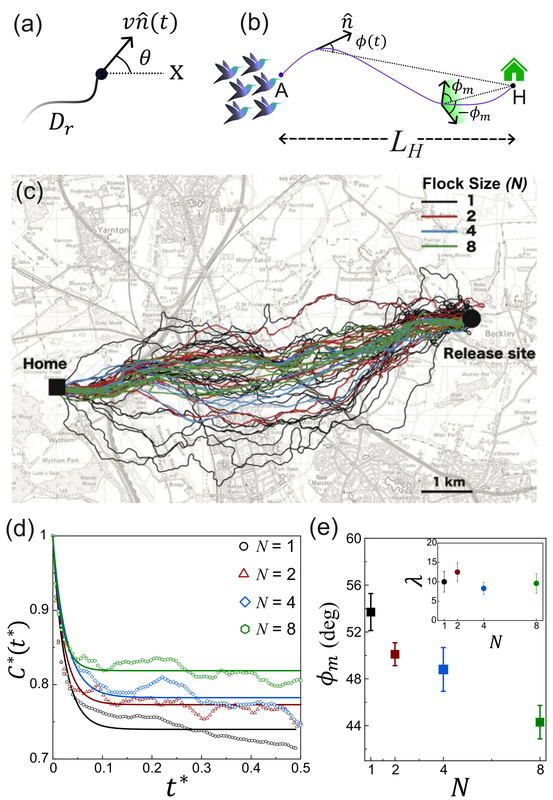
In the intricate world of animal behavior, discovering how groups make collective decisions can lead to profound insights about social dynamics, communication, and even the nuances of leadership. A recent study titled "Entropy-production cost limits hierarchical decision-making in homing pigeon flocks" dives deep into the decision-making processes among flocks of homing pigeons, revealing that the size of the flock significantly influences the hierarchy and egalitarianism within the group.
Examining Collective Decision-Making in Birds
At the heart of this research lies the observation that when groups of pigeons navigate back to their home loft, they must amalgamate diverse opinions and preferences regarding their routes. Traditionally, this amalgamation has illustrated itself through various hierarchical structures, where an asymmetrical leader-follower dynamic often governs the group. However, the authors investigate how these structures change as flock size increases.
The Findings: Size Matters
Using pigeons as their primary subjects, the research illuminates that smaller flocks display clear hierarchical structures. In contrast, as more pigeons join the flock, the evidence shows a remarkable transition toward more egalitarian decision-making. This shift suggests that leader-follower dynamics diminish in larger groups, countering previous notions about fixed hierarchies in animal groups.
Applying the Laws of Thermodynamics to Social Dynamics
The research employs an innovative thermodynamic framework which posits that the cost of communication—and consequently the hierarchy within the flock—is intrinsically linked to information processing capabilities. In simpler terms, with increasing flock size, the cost of influencing decisions among individual pigeons becomes too high to maintain a strict leadership hierarchy. Instead, information is processed in a more egalitarian manner as the communication pathways between birds become less reciprocal.
The Framework of Collective Navigation
To analyze this fascinating phenomenon, the researchers developed a trajectory-based framework that quantifies the hierarchy among the pigeons. They found that as the size of the flock increased, the probability that one pigeon could influence another decreased. Each pigeon’s ability to produce and process information was quantified through a measurable entropy production rate, and their calculations posited that maintaining a constant rate of entropy production for each individual directly correlates with diminishing leadership structure in larger flocks.
Beyond Just Pigeons: Broader Implications
This research holds broader implications not just for ornithologists but for anyone intrigued by group dynamics—whether in animal behavior, social sciences, or even AI systems. Understanding how communication, hierarchy, and decision-making processes function synergistically can enrich our comprehension of both biological and artificial systems.
Concluding Thoughts
By shedding light on how homing pigeon flocks adapt their decision-making strategies based on size and communication efficiency, the research opens doors to potential strategies in collective problem-solving among varied species, including humans. The findings challenge long-held perceptions of group hierarchy, implying that as groups become larger, they might just become smarter through enhanced egalitarian collaboration.
Authors: {Bibaswan Ghosh, Vipul Rai, Harsh Soni, Nitin Kumar}


