
Data-Driven Insights: How Online Searches Reveal Japan's Evolving Attitude Towards Nuclear Power Post-Fukushima
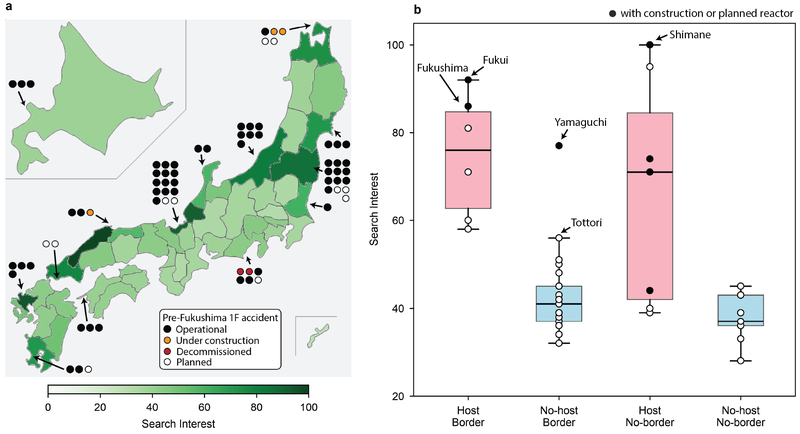
A recent groundbreaking study from Kyoto University has shed light on the shifting dynamics of public attention to nuclear power in Japan from 2004 to 2024. By examining over two decades of Google Trends data, the research illustrates how societal perceptions of nuclear energy changed dramatically, particularly following the Fukushima Daiichi nuclear accident in 2011. The findings hold valuable implications for public engagement strategies regarding nuclear energy, not just in Japan, but globally.
The Context: Fukushima and its Aftermath
The Fukushima Daiichi disaster in March 2011 prompted Japan to shut down its nuclear fleet, which had previously generated about 30% of the country's electricity. This shutdown not only raised energy security concerns due to increased reliance on imported fossil fuels but also marked a significant turn in public opinion towards nuclear energy. The study's authors, Yifan Sun, Ken Kurosaki, and Benjamin C. McLellan, aimed to understand what information the public sought during this crucial time, emphasizing that informed engagement is vital for any future energy policy.
Mapping Public Attention: Search Trends Unveiled
Analyzing data from Google Trends allowed researchers to reveal specific patterns of interest, which generally echoed a "host-locality" trend. This means that areas with operational nuclear reactors had substantially higher search interest compared to other regions. Interestingly, the alterations in online search behaviors post-Fukushima showcased a geographic shift; while areas close to the disaster sought real-time updates and safety information, those farther away turned to general background knowledge and understanding of nuclear concepts.
Behavioral Insights: What Did People Really Want to Know?
During March 2011, as uncertainty loomed, survey data indicated a significant increase in searches about nuclear power and radiation. People wanted immediate answers—questions like "What is a nuclear power plant?" and "What is radiation?" dominated search queries. As time passed, the study revealed a progression in the public's queries. Initially focused on urgent real-time information, interest transitioned to deeper, more technical inquiries about nuclear mechanisms and safety measures as the crisis evolved.
The Re-emergence of the Host-Locality Pattern
After an initial surge in public interest post-Fukushima, the study documented a return to the pre-accident "host-locality" pattern by 2012. This suggests that while the Fukushima disaster momentarily heightened national attention to nuclear issues, awareness soon localized again, particularly in areas with nuclear plants. The data implies that ongoing effective communication efforts are necessary in these regions as Japan revisits nuclear energy post-shutdown.
Implications for Public Engagement and Education
The insights gathered from this research highlight the need for tailored public communication strategies that resonate with what citizens are actively searching for during crises. Given the apparent lack of baseline knowledge about nuclear energy among the public, the study emphasizes that emergency communication should not only provide updates but foster a deeper understanding of nuclear safety and energy concepts that extend well beyond immediate fears.
As nations worldwide consider nuclear power within their energy future, utilizing such data-driven insights will prove essential in informing strategies that build public trust and understanding amidst sensitive and critical energy discussions.


