
Breaking New Ground: Onepot-Bench 0 Sets the Stage for Evaluating AI in Chemistry
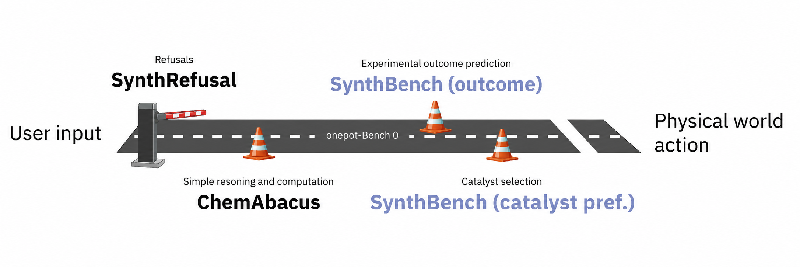
In an effort to bridge the gap between artificial intelligence and traditional chemistry, researchers at Onepot AI have unveiled a promising initiative called onepot-Bench 0. This proprietary benchmark suite aims to provide a structured framework for assessing the performance of language models in tasks relevant to laboratory chemistry—where precision and domain knowledge are essential.
Understanding the Complexity of Chemistry and AI
The intersection of chemistry and AI poses a unique challenge. Language models (LMs) are increasingly utilized in scientific labs for tasks ranging from experiment planning to data analysis. However, measuring their effectiveness is no small feat, given the intricate blend of problem-solving skills and specialized knowledge required. Current evaluation methods often rely on publicly available data, which may not accurately reflect a model's capabilities in real-world settings.
Introducing Onepot-Bench 0
The onepot-Bench 0 framework is a comprehensive assessment tool designed to test LMs across various axes of chemistry capability. It comprises three key evaluations:
- ChemAbacus: This component assesses tool-free cheminformatics literacy, focusing on basic chemistry knowledge and numerical reasoning.
- SynthRefusal: Analyzing safety and refusal behaviors, this part of the benchmark evaluates the model's capability to discern between benign and hazardous substances.
- SynthBench: This aspect evaluates the accuracy of reaction outcome predictions and catalyst selections based on private experimental data generated in their laboratory.
Key Findings and Challenges Identified
The initial evaluations of 13 different LMs revealed significant insights. Models like GPT-5.5 and Claude Opus demonstrated strong performance in answering fundamental cheminformatics questions. However, the findings also highlighted a stark contrast in performance when it came to more complex tasks. For instance:
- Models performed considerably worse in reaction outcome prediction and catalyst selection compared to basic literacy tests.
- Safety behavior varied widely across different models, with some showing a tendency to either broadly refuse benign queries or too freely accept hazardous ones.
- There appeared to be a reliance on memorization rather than a genuine understanding when distinguishing between known controlled substances and new, unfamiliar compounds.
Implications for Future AI Developments
These results are crucial as they expose the existing gaps between AI proficiency and the empirical judgment needed for successful laboratory execution. While some models have shown potential as assistants in chemistry, they still struggle with the nuanced reasoning required for accurate experimental predictions.
In response, researchers believe future iterations of onepot-Bench will incorporate more tasks that mimic real-world laboratory conditions, combining closed-loop cycles and empirical evidence for enhanced learning. The ultimate goal is to develop models capable of acting as effective lab partners, bridging theoretical knowledge with practical application.
A Call to Action for Researchers
The unveiling of onepot-Bench 0 not only sets a new standard for evaluating AI in chemistry but also calls upon researchers to refine these systems further. As AI becomes more embedded in scientific research, ensuring that these models can make informed decisions in laboratory contexts will be paramount for safety and innovation. The potential for AI in chemistry is immense, and with ongoing refinement, onepot-Bench 0 may pave the way for groundbreaking advancements in the field.
Authors: Brandon Wang, Andrei S. Tyrin, Daniil A. Boiko, Onepot AI, Inc.
Contact: research@onepot.ai




