
Breaking Down EEG Models: How Spatial and Spectral Probing Exposes Neural Insights
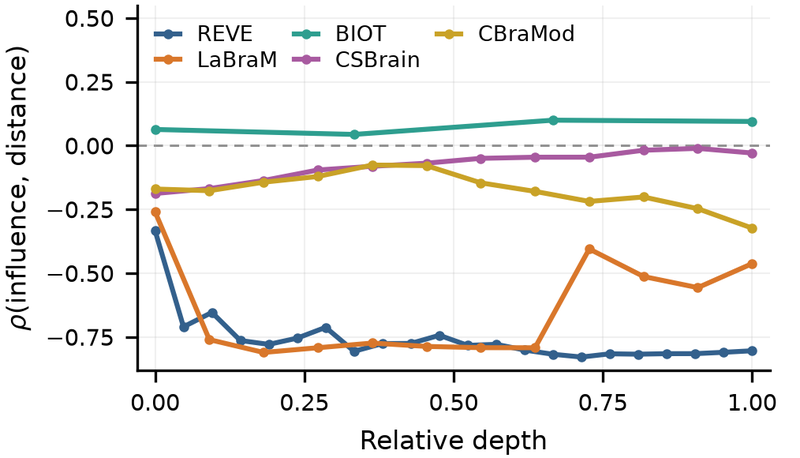
Recent advancements in electroencephalography (EEG) foundation models have shown promise in interpreting brain activity accurately. However, a new study by Kleanthis Avramidis, Ivan Tashev, and Dimitra Emmanouilidou introduces a revolutionary approach to evaluate these models beyond mere accuracy metrics. Their research sheds light on the crucial aspects of how these models process spatial and spectral information, which are vital for clinical interpretations of EEG signals.
The Limitations of Current EEG Evaluations
Traditional methods for assessing EEG models often focus solely on accuracy, failing to reveal the underlying mechanisms that contribute to these predictions. This can lead to misunderstandings about a model's capabilities, as high performance does not guarantee an accurate representation of physiologically meaningful EEG structures. The authors argue that crucial properties like spatial context and signal morphology should inform the evaluation process to ensure models are genuinely useful in clinical settings.
Innovative Probes Unveiled
To tackle these issues, the researchers implemented perturbation probes that focus on two grounding axes: spatial grounding, which considers electrode identity and channel locality, and spectral grounding, which investigates oscillatory content and waveform characteristics. By analyzing five different EEG foundation models, the study identified significant differences in how well each model encoded spatial and spectral information, revealing hidden complexities often overlooked in standard benchmark tests.
Key Findings: What Models Really Capture
One of the most intriguing findings was that electrode identity could be encoded without significantly impacting the model's predictions. For instance, LaBraM's positional codes could be altered without heavily influencing motor imagery accuracy. Additionally, while spectral features were found to be distinguishable, they did not always translate into reliable responses for clinical markers. This means that even if a model appears to recognize specific frequency components, it may not utilize that information meaningfully in practice.
The Need for a Paradigm Shift in EEG Model Evaluation
Through their comprehensive examination, the authors stress the importance of moving beyond performance-based evaluations. The study suggests that understanding what EEG models encode and how they utilize these encodings should be pivotal in developing more effective and interpretable tools for diagnosing neurological conditions. This nuanced approach could lead to more reliable clinical applications and avoid reliance on performance metrics that obscure deeper insights.
Conclusion: Empowering Future EEG Interpretations
Avramidis, Tashev, and Emmanouilidou's exploration into the spatial and spectral grounding of EEG foundation models presents a significant step toward improving our comprehension of brain activity interpretations. Their methodical probing can empower researchers to refine these models, ensuring they not only perform well but also provide interpretable, clinically relevant insights. As the field progresses, integrating these findings could enhance the reliability and efficacy of EEG analyses, promising better outcomes for patients with neurological disorders.
Authors: Kleanthis Avramidis, Ivan Tashev, Dimitra Emmanouilidou.


