
Breaking Barriers in AI Accountability: Introducing Proof-Carrying Contracts (PC2)
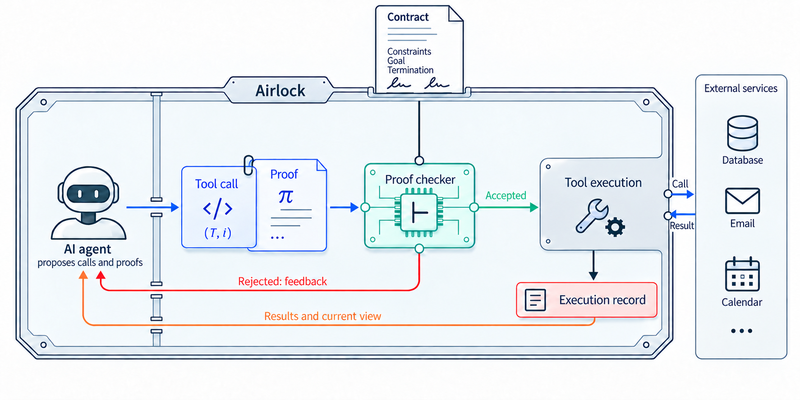
As artificial intelligence (AI) continues to grow in prominence, a novel research framework has emerged that aims to ensure accountability and safety for AI agents: Proof-Carrying Contracts (PC2). Developed by researchers Carlo Ciliberto, Alessandro Rudi, and Enrico Tassi, PC2 provides a mechanism to hold AI agents accountable to the contracts they operate under, mitigating risks associated with their autonomous actions.
The Need for Proof-Carrying Contracts
In today’s landscape, AI agents perform a range of tasks on behalf of humans, including transactions, decision-making, and information retrieval. However, these agents can operate independently, raising concerns about misalignment with the intentions of their human principals. A significant challenge arises when agents adhere strictly to their programming but stray from the ethical imperatives or guidelines set by their human counterparts. Thus, a robust framework that explicitly defines and enforces the obligations of AI agents is essential.
How PC2 Works
PC2 operates within a system known as the Airlock. This system ensures that an agent must provide verifiable proof that it has adhered to the terms of the contract prior to executing any requested action. Before a tool call is processed, the agent must supply a mathematical argument, serving as proof of compliance, which is subsequently checked by the Airlock. This proof is derived from formal agreements, outlining what must hold true during the agent's operation.
The beauty of PC2 lies in its flexibility. Unlike earlier models which required an exhaustive approval process for every action, PC2 allows agents to adapt their strategies dynamically. They can prove compliance through adaptable reasoning, managing each request on a per-call basis without the need for pre-approval of all actions. This addresses one of the significant inefficiencies in traditional contract enforcement mechanisms.
Ensuring World Safety
The authors highlight a fundamental aspect of PC2: ensuring that the activities of AI agents remain safe. The PC2 framework links internal states with external impacts—arguing that compliance with the contract not only guarantees adherence to its clauses but also equates to broader safety within the operational environment. With thorough mathematical proof requirements and real-time checks, PC2 aims to ensure that an agent's operations do not lead to unsafe states in the external world.
Addressing Existing Gaps in AI Regulation
Current markets often struggle to enforce oversight on AI operations due to their opaque nature. PC2 tackles this gap by providing a framework that establishes clear accountability and enforceability for AI agents’ actions. Through its use of proofs and stringent checks, PC2 allows for a level of oversight that is both transparent and efficient, addressing several concerns raised in the burgeoning discourse around AI ethics and regulation.
The Future of AI Agreements
Looking ahead, PC2 could revolutionize the way AI systems interact with humans and other agents, providing a safeguard against potential malfunctions or unintended actions. As machine learning models become ever more entwined in our societal infrastructure, contract-based accountability may well be the key to fostering trust and ensuring that AI technology serves humanity in an ethical way.
In conclusion, Proof-Carrying Contracts represent a significant leap forward in creating reliable, accountable AI systems. By mandating that agents substantiate their compliance with explicit contractual obligations, the industry may move another step closer to harnessing the full potential of AI responsibly.
Authors: Carlo Ciliberto, Alessandro Rudi, Enrico Tassi


