
Beyond Uncertainty: How Multichoice Modeling Revolutionizes Strategic Decision-Making
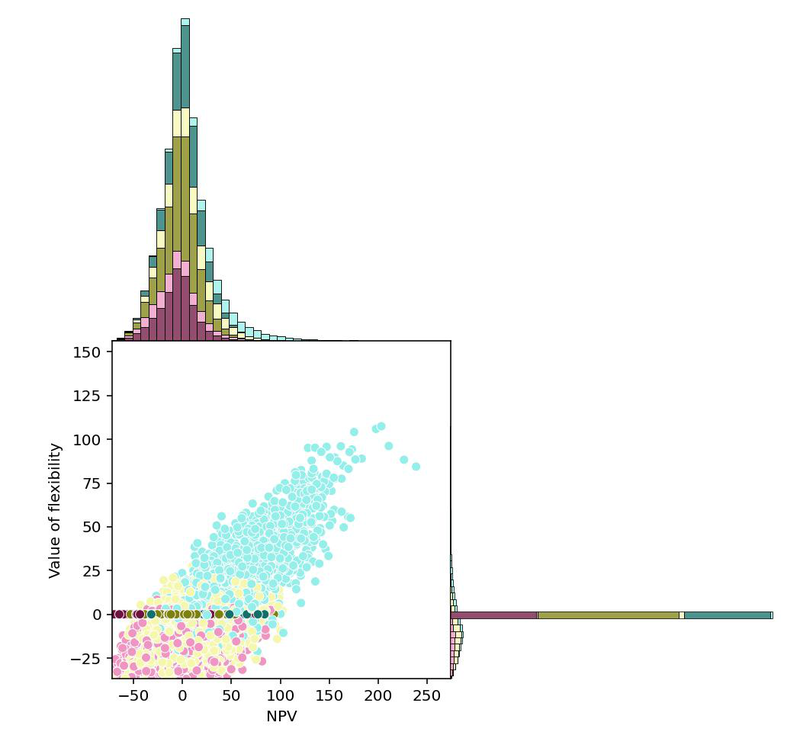
In a rapidly changing world, any effective decision-making framework must embrace uncertainty rather than shy away from it. A groundbreaking new paper titled “Multichoice Modeling: Exploring Decision Configuration Space under Uncertainty” presents a novel framework that goes beyond conventional decision analysis, offering a rich and exploratory approach to navigating complex decision landscapes.
Understanding the Need for Change
Despite advancements in decision support mechanisms, many frameworks still confine themselves to analyzing a limited set of predefined strategies. This restricted view often leads to a narrow assessment of outcomes, failing to capture the intricate dependencies and interactions present in decision-making processes. The authors—Mariia Kozlova, Roman Stepanov, Alexander Walzer, and Andrea Saltelli—argue that empowering decision-makers to broaden their exploration can unearth valuable insights that conventional models overlook.
What is Multichoice Modeling?
The paper introduces multichoice modeling as a systematic framework designed to make dense decision spaces explicit and computationally accessible. It conceptualizes decision-making under uncertainty as a multidimensional terrain where choices interact, affecting the overall outcome. By representing choices as interconnected components within a rugged landscape, decision-makers can better navigate potential futures influenced by a multitude of uncertain factors.
How Does It Work?
The multichoice modeling framework is grounded in a logical structure where decision configurations are identified and analyzed. It employs rigorous computational methods, including Monte Carlo simulations and variance-based sensitivity analysis, to assess how different choices impact performance across uncertain scenarios. This allows for an exploration of what configurations create the most advantageous outcomes, rather than just evaluating a single strategy.
Real-World Applications: Case Studies
The authors eloquently illustrate the potential of multichoice modeling through three impactful case studies: upgrading a manufacturing process, optimizing a mergers and acquisitions (M&A) strategy, and designing a household mortgage. Each study showcases how the approach opens up a wealth of decision alternatives that can reveal unexpected complementarities and alternative strategies not initially considered.
Significance of the Findings
The research underscores that by broadening the decision configuration space, organizations can identify not only the most favorable strategies but also understand the interplay between different choices under varying uncertain conditions. For example, in the mortgage case, the authors demonstrated how exploring various payment schemes and rate types under uncertainty uncovered alternatives that could significantly save costs compared to conventional fixed-rate options.
Conclusion: A Shift in Decision-Making Paradigms
Ultimately, multichoice modeling represents a paradigm shift in strategic decision-making. It compels organizations to move from a mindset of strict optimization toward one of exploration and adaptability. As uncertainties abound, being prepared to consider an array of potential decision paths can lead to more robust, flexible, and informed strategies.
As explained by the authors, “We shape our tools and thereafter our tools shape us,” reminding decision-makers that the methodologies employed in their analysis can greatly influence the outcomes of their strategies.
For those interested in optimizing their decision-making frameworks amid today's uncertainties, this paper offers a compelling argument for adopting the multichoice modeling approach.
Authors: Mariia Kozlova, Roman Stepanov, Alexander Walzer, Andrea Saltelli


