
Beyond Basic Data: How Semantic Cell Annotation is Revolutionizing Spreadsheet Interactions
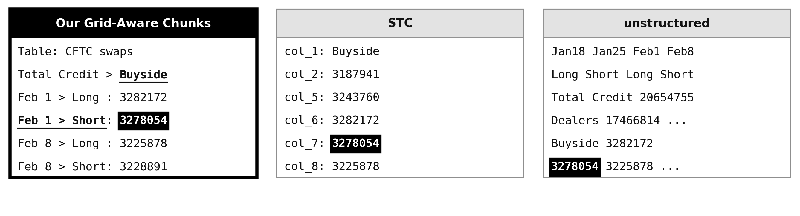
In an age where data-driven insights are paramount, a groundbreaking piece of research by Zofia Smoleń from the Polish Academy of Sciences reveals a pivotal advancement in working with spreadsheets. Her study, titled "fQ&A on Any Spreadsheet Requires Interpreting Its Grid Structure," proposes a novel framework to improve how large language models (LLMs) interact with spreadsheet data, enhancing their ability to generate accurate and relevant answers.
Understanding the Challenge
Spreadsheets, a staple in data management and analysis, often pose significant challenges for AI systems, particularly in their interpretation and interaction. Traditional methods of chunking data—breaking it down into smaller, manageable pieces—have relied heavily on structured formats, leaving much to be desired when handling the inherently unstructured and two-dimensional nature of spreadsheets. Smoleń's insights shed light on a major flaw: standard approaches often result in a loss of contextual information during data extraction, leaving AI systems guessing the meanings behind numbers and values.
The Innovative Framework
Smoleń's research introduces a semantic cell annotation method that enhances chunking interpretability for spreadsheets within retrieval-augmented generation (RAG) systems. By accurately annotating the roles of various cells within a spreadsheet, the model can generate much more context-rich answer chunks. This means that instead of merely fetching data, the framework interprets it, providing full context—like the hierarchical relationships between rows and columns—in effortlessly digestible formats.
A Breakthrough in Performance
The research showcases remarkable results. In rigorous testing, chunks built using the learned cell roles outperformed traditional methods by a notable margin, achieving an impressive human-rated score of 3.88 out of 5, compared to the best existing model at 3.43. This signifies a substantial leap in the ability of AI systems to "understand" and contextualize spreadsheet data.
Moving Towards Adaptability
One of the key takeaways from Smoleń's study is the recognition that standardization isn't always effective. Many spreadsheets do not adhere to a conventional structure, and imposing one-size-fits-all solutions can prevent successful outcomes. The proposed methodology emphasizes adaptability, suggesting that future advancements should allow for varied chunking strategies tailored to the specific layout and context of each spreadsheet. This approach could even facilitate the conversion of tabular data into more natural language formats.
Conclusion: Implications for the Future
This research has far-reaching implications, particularly for sectors reliant on data analysis and reporting, including finance, education, and research. As AI continues to permeate every aspect of professional life, ensuring these systems can accurately interpret and make sense of complex datasets is critical. Zofia Smoleń's innovative framework not only addresses current limitations but also paves the way for more intelligent data applications in the future.
In essence, as Smoleń effectively argues, the key to unlocking the true potential of spreadsheets lies in understanding and interpreting their intricate structure. This groundbreaking work heralds a future where AI doesn't just process numbers, but truly comprehends the data landscape, leading to richer insights and more informed decision-making.




