
Are We Paving the Way for Smarter Robotics? Dissecting the Role of Motion-Prior Regularization in Robot Insertion
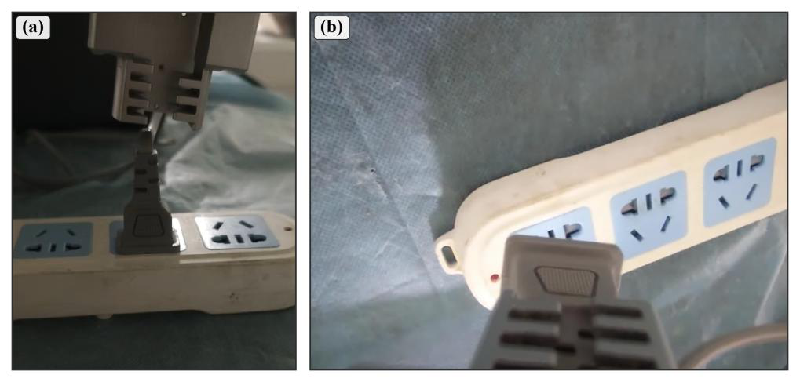
In an era where robotics is advancing at a rapid pace, a recent study has sparked interest by investigating an essential component of robotic functionality: motion-prior regularization. Conducted by researchers from the University of Tennessee and the University of Florida, this study explores whether specific training techniques can improve the success rate of robotic insertion tasks, particularly when relying on a limited number of demonstrations.
The Challenge of Robotic Insertion
Robotic insertion tasks demand high precision, as they often involve manipulating objects in tight spaces. The problem becomes even more complex when the robot must learn from just a handful of demonstrations—in this case, only 15. The study aimed to determine if employing motion-prior regularization techniques could enhance the robot’s ability to carry out these tasks successfully.
Understanding Motion-Prior Regularization
So, what exactly is motion-prior regularization? At its core, it's a training approach that encourages more consistent, smooth movements in robotic actions. This study particularly looked at two types of regularization: minimum jerk and speed-curvature. Minimum jerk is about minimizing abrupt changes in acceleration, while speed-curvature couples how fast a robot moves with the shape of its path.
The researchers tested these regularization methods across 80 real-robot trials and sought to compare their effectiveness in achieving successful insertion of plugs into sockets. Remarkably, both the combined and minimum jerk-prior settings achieved an impressive 70 out of 80 successes, leading researchers to explore why certain methods performed better.
The Key Findings
According to the results, the minimum jerk method not only matched the highest success rate but did so in a simpler manner than its speed-curvature counterpart, which did not provide additional gains when combined with minimum jerk regularization. This suggests that the minimum jerk approach is a more straightforward solution for enhancing robotic insertion tasks.
The results emphasized the importance of smooth, consistent movements over complex speed adjustments in scenarios where rapid reaction is crucial. The study also noted that the two methods didn’t necessarily work in tandem to enhance performance, indicating that the robot didn’t benefit from a combination of these strategies.
Implications for Future Robotics
The research opens up exciting avenues for developing smarter, more efficient robotic systems. By demonstrating that high task success rates can be achieved with relatively simple motion-prior regularization techniques, the findings encourage further exploration in optimizing robot training protocols.
This study raises compelling questions about the future of robotics: Can we leverage these insights for other complex robotic tasks? How does the simplicity of motion-prior regularization influence the design and functionality of robots in various applications?
With the landscape of robotics continuously evolving, understanding how these techniques can be applied and improved is essential for researchers and engineers aiming to create highly functional and reliable robotic systems.
Authors: Ning Hu, Shuai Li, Jindong Tan




