
A Peek Into the Hidden Forces: How Entropy Plays a Vital Role in Protein Phase Behavior
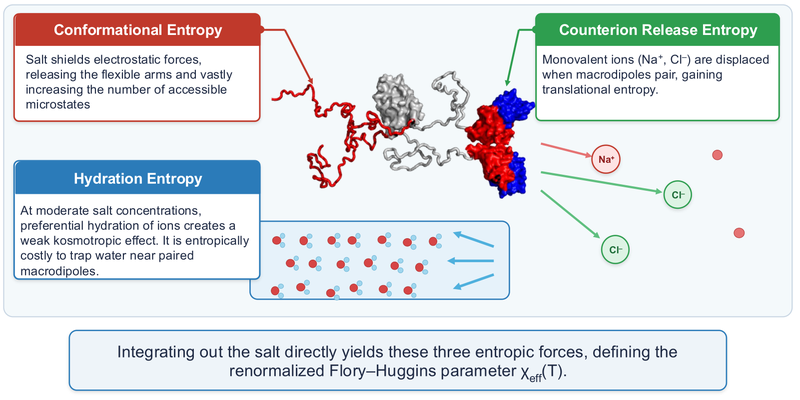
In a groundbreaking study, researchers D. A. Herrera-Martí and Marc Jamin unveil a novel theoretical framework that explains the intricate phase transitions of intrinsically disordered proteins (IDPs). This innovative approach links entropic forces to phase separation, providing crucial insights for understanding various biological processes, including those leading to diseases like Alzheimer's and Parkinson's.
Understanding Intrinsically Disordered Proteins
Intrinsically disordered proteins are fascinating biological molecules that do not have a fixed or stable three-dimensional structure. Instead, they are flexible and dynamic, allowing them to participate in numerous interactions and functions within biological systems. Approximately 20-30% of eukaryotic proteins exhibit disordered regions, making them vital in cellular signaling, transcription, and biomolecular condensation.
The Phenomenon of Liquid-Liquid Phase Separation
The phenomenon of liquid-liquid phase separation (LLPS) allows proteins and RNA molecules to demix from their cellular environment, leading to the formation of membrane-less compartments. This process can be triggered by changes in environmental conditions, such as temperature, ionic concentration, and molecular concentration.
Two primary types of phase transitions are considered: the upper critical solution temperature (UCST) where cooling promotes phase separation, and the lower critical solution temperature (LCST), where increasing temperature drives the separation. The latter, especially relevant in the context of IDPs, was central to the study presented by Herrera-Martí and Jamin.
A Novel Theoretical Framework
The researchers introduce a mean-field model—an extension of classical Flory-Huggins theory—that captures both LCST behaviors and reentrant phase phenomena (where phases reappear upon changing conditions) in IDPs based on their interaction parameters. They suggest that an effective entropic force arises when certain fast-moving molecular species (like salts) are integrated out of the system's dynamics.
This new approach importantly emphasizes the role of the "sticky patches" on protein molecules, which influence their interactions and the phase behavior of the resultant mixtures. By considering these factors, the model successfully predicts phase diagrams that align with recent experimental findings on the rabies virus phosphoprotein that exhibits interesting temperature- and salt-dependent behaviors.
Implications and Future Applications
Beyond contributing to our understanding of IDPs, this research holds promise for significant applications in various fields, including drug design and disease treatment. By elucidating how entropic forces govern protein interactions and phase behavior, it paves the way for more refined therapeutic approaches against conditions linked to protein misfolding and aggregation.
The framework also invites future explorations, enabling researchers to investigate the implications of complex multicomponent systems and enhancing our comprehension of biological processes influenced by LLPS.
In a world where understanding the molecular underpinnings of life is increasingly complex, this research serves as a beacon of clarity, shining light on the essential role of entropy and forces driving protein interactions and cellular organization.
Authors: D. A. Herrera-Martí, Marc Jamin


