
The Language Time Capsule: How Our Words Reveal the Secrets of Human History
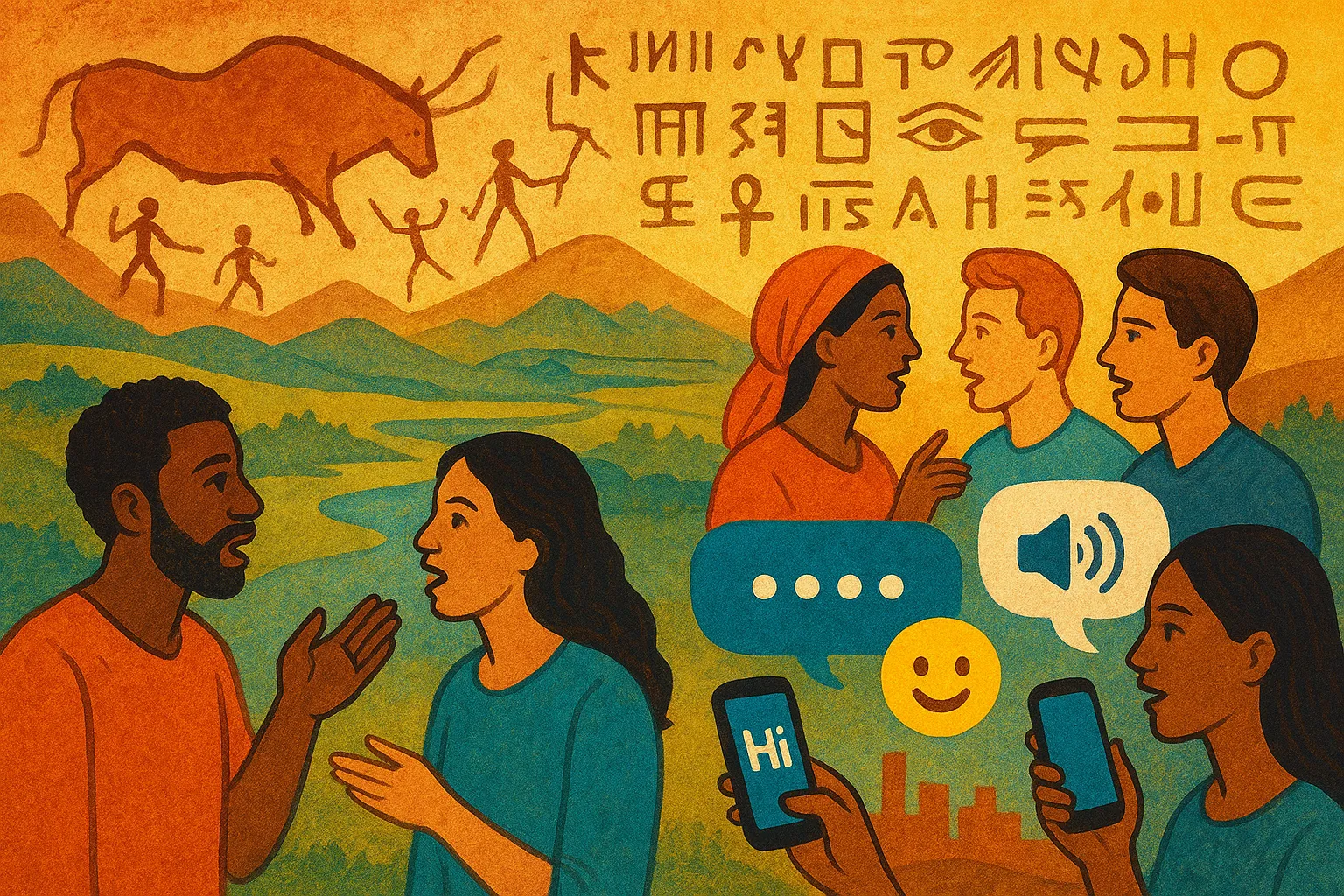
Language is more than just a tool for communication; it’s a living archive of our shared past. Each syllable we utter carries fragments of history, culture, and identity. As we explore the evolution of languages, we uncover the rich tapestry of human experience that shapes our world today. But how did we go from grunts and gestures to the complex languages we speak now? Let’s unravel this captivating story.
The Dawn of Language: A Theory of Origins
The origins of language remain one of humanity’s greatest mysteries. While we can't pinpoint an exact moment when language began—some researchers suggest it could have started over 100,000 years ago with early Homo sapiens—it's believed that as our ancestors evolved, so did their methods of communication. This primitive form of communication likely involved gestures and simple sounds to convey basic needs and emotions.
Language Families: A World of Connections
As civilizations emerged, so too did diverse languages. Linguists categorize languages into families based on common roots. For instance, the Indo-European language family includes a wide range of languages, such as English, Spanish, Russian, and Hindi. Surprisingly, nearly half the world’s population speaks a language from this family! Understanding these relationships not only reveals how languages evolved but also how human cultures interacted and influenced each other.
The Role of Conquest and Migration
History is filled with conquests and migrations, leading to the spread and transformation of languages. When people move, they bring their language with them, often blending it with that of indigenous populations. Take the case of English—it started as a Germanic language and became a global powerhouse, absorbing vocabulary from Latin, Norse, and French due to conquests and trade. This adaptive nature of language reflects broader historical processes, intertwining human fates across continents.
Writing Systems: The Turning Point
The development of writing systems was a pivotal milestone in the history of language. From ancient cuneiform in Mesopotamia to Egyptian hieroglyphs, writing allowed languages to transcend time and space, preserving knowledge for future generations. Imagine the treasure trove of information we would lose without written language! The ability to document thoughts, laws, and stories has laid the foundation for modern civilization. Today, we have an explosion of writing systems, each adding to the richness of linguistic heritage.
The Digital Age: Language Evolution in Real-Time
Fast forward to the 21st century, and language is evolving at lightning speed. With the rise of the internet and social media, new slang, emojis, and abbreviations emerge daily, reshaping how we communicate. Have you ever puzzled over a meme or an acronym? These new forms of expression are part of a living language, showing how adaptable and dynamic human communication can be. Interestingly, while technology accelerates change, it also helps preserve languages through digital archives and online learning platforms.
Preserving Diversity: The Fight Against Language Extinction
Despite the richness of global languages, UNESCO estimates that one language disappears every two weeks. This loss is alarming, as many languages encapsulate unique ways of viewing the world. Efforts are being made worldwide to document and revitalize endangered languages, empowering communities to reclaim their linguistic heritage. Supporting these languages is crucial, not only for cultural identity but also for preserving the vast knowledge embedded in them.
The Future of Language: What Lies Ahead?
As we look to the future, one thing is clear: language will continue to evolve. With globalization and cross-cultural interactions on the rise, hybrid languages and creoles may become more prevalent. Moreover, advancements in artificial intelligence could lead to new ways of translating and understanding human language, opening doors to unprecedented communication possibilities. The key takeaway? Language is a remarkable journey—one that reflects our past, shapes our present, and will undoubtedly influence our future.
In conclusion, exploring the history of languages is like unlocking a treasure chest filled with the keys to our shared humanity. Each word tells a story, linking us to our ancestors and to one another. So next time you speak or write, remember: you are part of an incredible lineage that spans millennia.


