
The Evolution of Transportation: How Our Mobility Got a High-Tech Makeover!
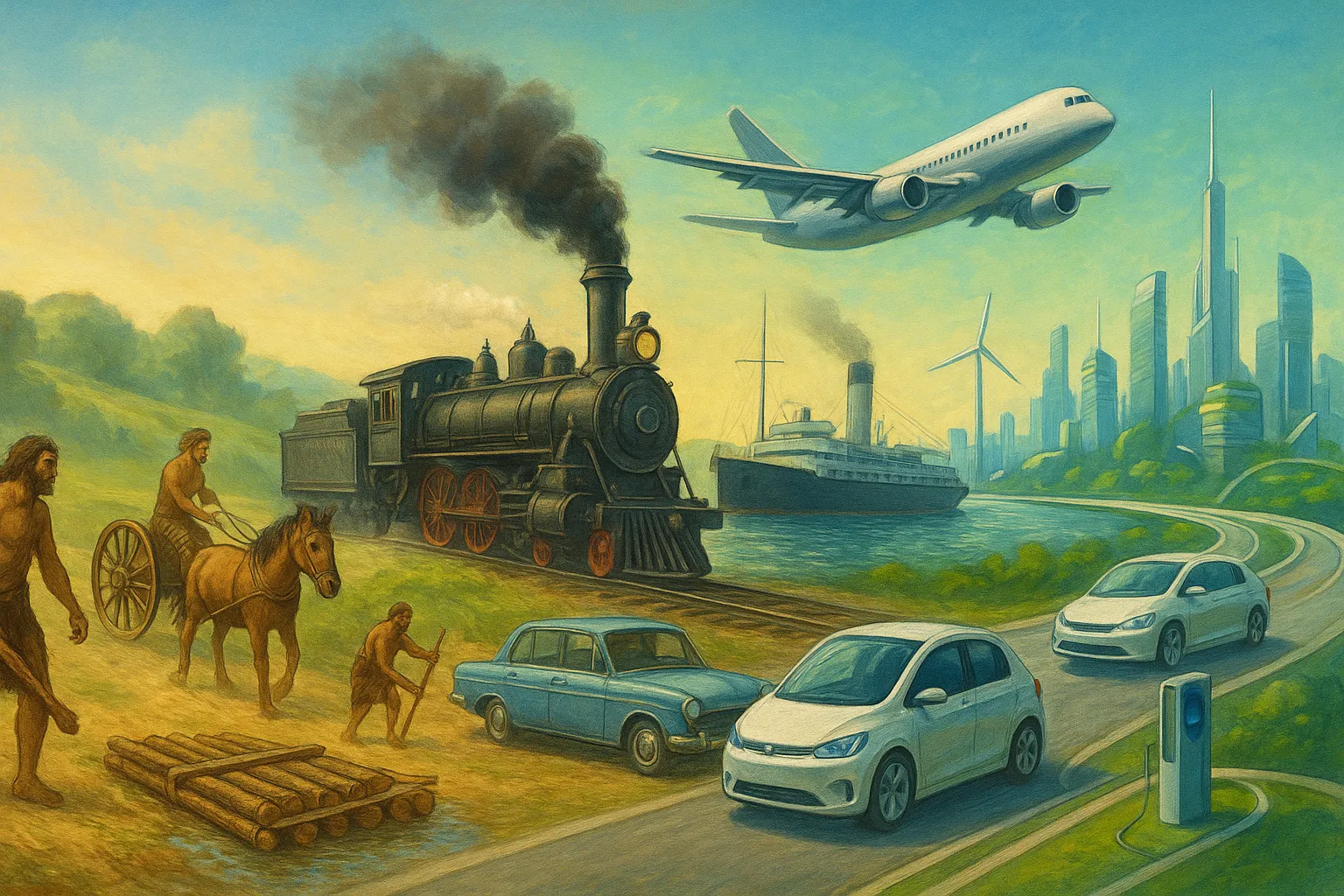
Transportation is more than just getting from Point A to Point B; it is a reflection of humanity's ingenuity and adaptability. From the humble beginnings of foot travel to the high-speed trains and autonomous vehicles of today, the history of transportation is a saga of innovation. In this article, we’ll take a journey through time to explore how transportation has evolved and what the future holds.
The Dawn of Mobility: Early Innovations
Long before the invention of the wheel, our ancestors relied on their feet, animals, and simple rafts to traverse landscapes. The earliest known forms of transportation date back to around 4,000-3,000 BC in Mesopotamia, where the wheel was invented, transforming travel forever. This basic circular mechanism enabled the creation of chariots, carts, and eventually paved the way for more advanced vehicles.
Transportation Revolution: The Age of Steam and Industry
Fast forward to the 18th and 19th centuries, the Industrial Revolution gave rise to steam power, marking a monumental shift in how we transport goods and people. The steam locomotive and steamship emerged, allowing for quicker and broader distribution of resources. By 1825, George Stephenson's locomotive, the Locomotion No. 1, began carrying passengers between Stockton and Darlington in England, marking the start of the rail boom and connecting cities like never before.
The 20th Century: Cars, Planes, and the World at Our Fingertips
The 20th century opened with remarkable advancements in personal and commercial transportation. The automobile revolutionized travel; with Henry Ford's Model T in the early 1900s, owning a car became a reality for many Americans, heralding a culture of freedom that persists to this day. Following automobiles, the airline industry took off after World War II, offering unprecedented travel speed and connecting the world on a global scale.
Today and Tomorrow: The Tech Edge in Mobility
Today, as we stand on the brink of autonomous vehicles and electric transportation, sustainability has become a key focus. Technology is reshaping our travel experiences with innovations such as ridesharing apps, electric scooters, and high-speed trains. The rise of smart cities using data analytics to streamline public transport represents the cutting edge of urban mobility.
However, with these advancements come challenges. Safety, privacy, and environmental concerns must be dealt with as we venture deeper into an age defined by technological innovation. The need for sustainable practices is clearer than ever; electric vehicles are gaining traction, and public transport is evolving to become more inclusive and efficient.
The Future of Transportation: What Lies Ahead?
So, what does the future hold? Hyperloop technology promises to further reduce travel times, while flying cars are no longer a figment of science fiction. As cities fight congestion and pollution, the integration of eco-friendly transport solutions will continue to reshape how we navigate our environments.
As we look forward to tomorrow, one thing is for sure: the history of transportation is a continually unfolding narrative, filled with promise, challenges, and endless possibilities. The journey is far from over, and we are all part of it.




