
Secrets of the Pharaohs: What Ancient Egypt Reveals About Our Modern World
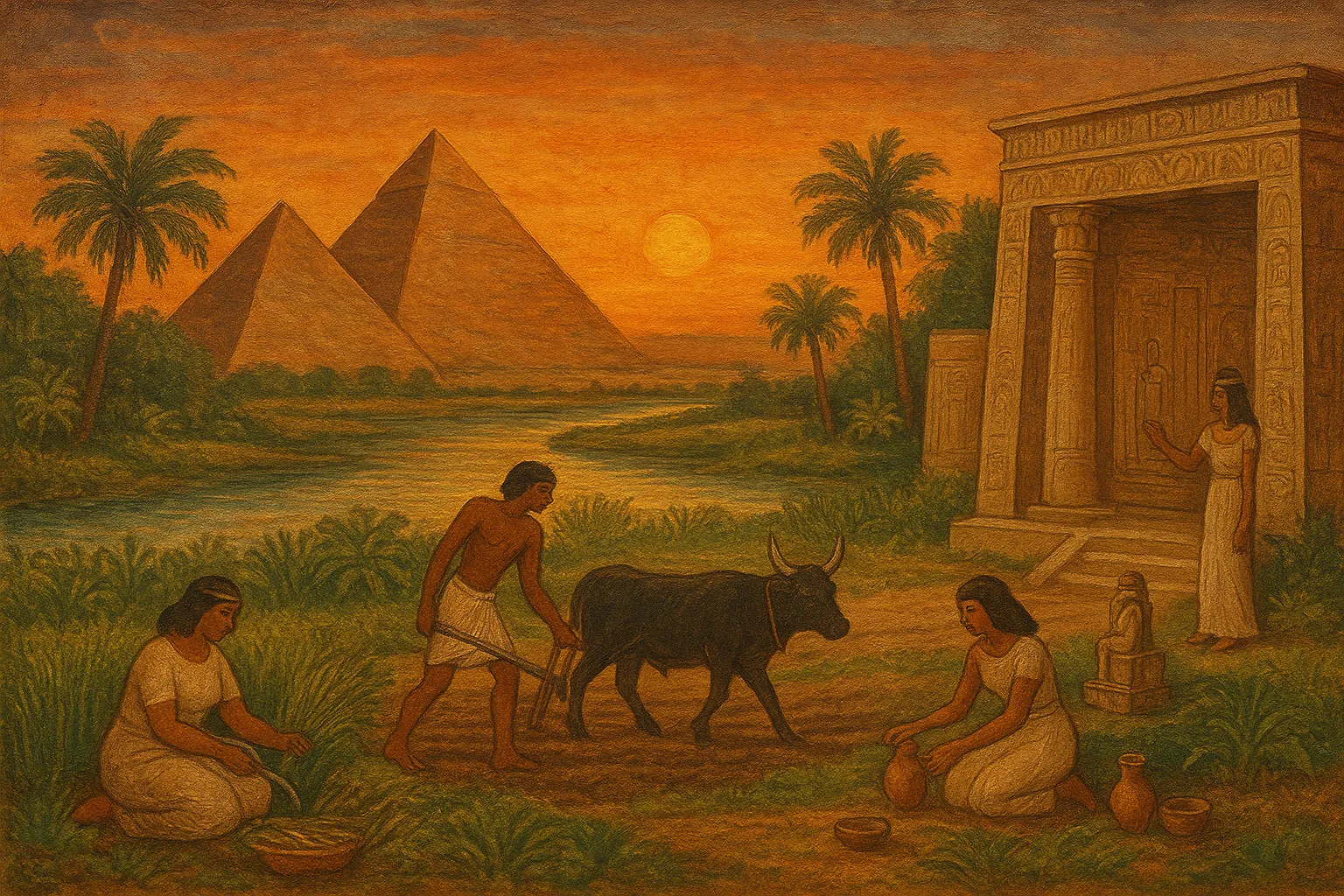
When we think of ancient civilizations, few evoke as much mystery, intrigue, and grandeur as Egypt. With its towering pyramids, enigmatic hieroglyphs, and the legendary Nile, this civilization has captured the imagination of millions. But beyond the romanticized images lies a rich tapestry of history that still influences our lives today.
The Birth of a Civilization
The story of ancient Egypt begins over 5,000 years ago, along the fertile banks of the Nile River. This life-giving waterway supported agriculture that allowed communities to flourish, paving the way for the formation of one of the world's earliest civilizations. The Egyptians were masters of innovation, developing advanced agricultural techniques and eventually creating a united kingdom under Pharaoh Narmer, marking the start of the Dynastic Period.
The Role of Religion
Central to Egyptian life was religion, which dictated everything from daily routines to grand funerary practices. The Egyptians worshipped a pantheon of gods and believed in an afterlife where one's deeds on Earth determined their fate. This belief led to the construction of monumental structures like the pyramids, which served as elaborate tombs. As we dig up the past, it becomes clear that their religious fervor defined societal norms and even influenced modern concepts of mortality and ethics.
Pyramids: More than Just Tombs
When we hear "Egypt," the pyramids often come to mind. However, these iconic structures were not merely grand burial sites; they were also statements of power and technological advancement. The Great Pyramid of Giza, built for Pharaoh Khufu, is one of the Seven Wonders of the Ancient World, showcasing remarkable engineering skills. Interestingly, recent studies suggest that these monumental buildings were constructed by skilled laborers rather than slaves, challenging long-standing myths about ancient Egyptian society.
Contributions to Writing and Science
The legacy of ancient Egypt extends beyond architecture and art. The development of hieroglyphics, a system of writing that combined ideograms and phonetics, laid the groundwork for future languages. This written form of communication was essential not only for recording history but also for the administration of an increasingly complex society. Furthermore, Egyptian advancements in medicine, astronomy, and mathematics have profoundly impacted modern science, demonstrating their remarkable ingenuity.
Lessons for Today
So, what can modern society learn from ancient Egypt? Their success was built on a foundation of innovation, cooperation, and a deep respect for the natural world. As we face global challenges like climate change and social inequities, revisiting the wisdom of these ancient people can inspire us to cultivate resilience and foster sustainable practices. After all, the Nile not only shaped their environment but also taught Egyptians the importance of balance—something we desperately need to embrace today.




