Black Holes: The Cosmic Vacuum Cleaners You Never Knew You Needed to Fear
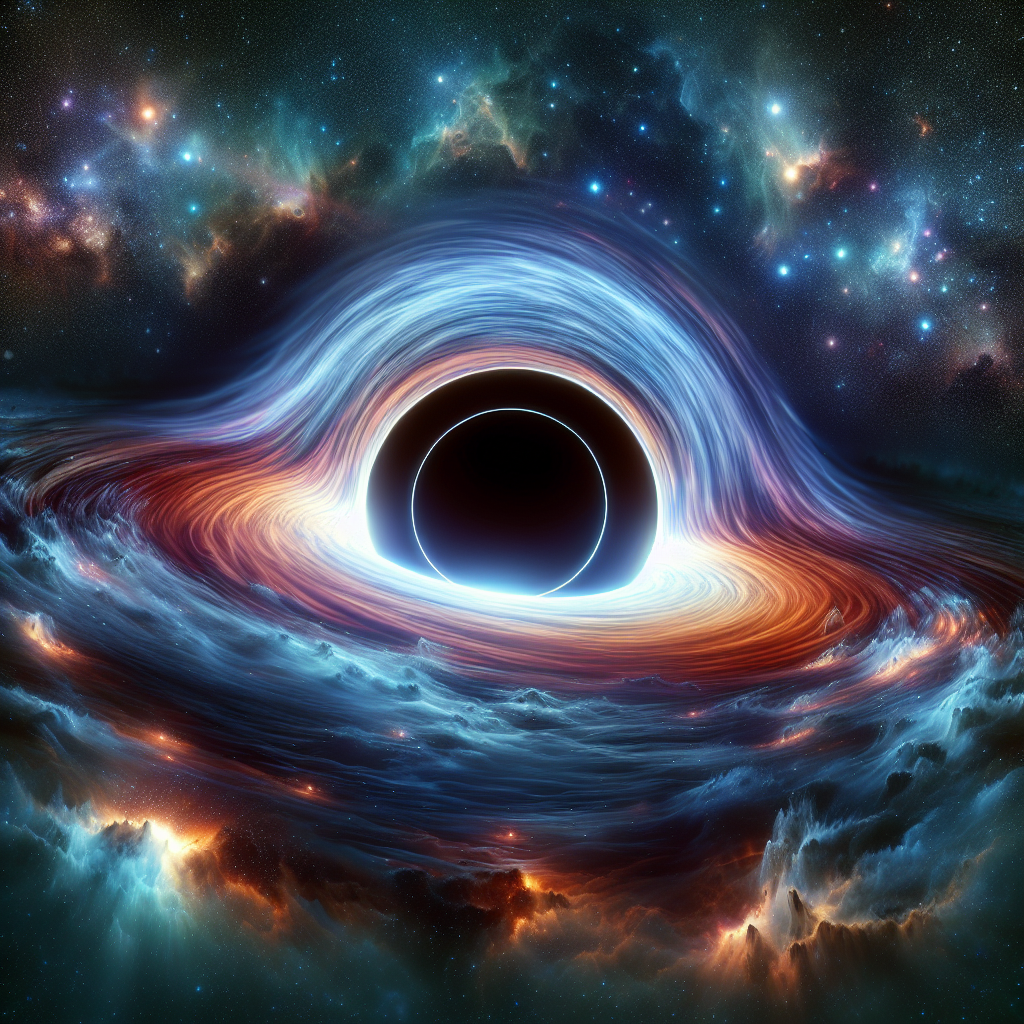
When you hear the term "black hole," images of intense gravitational forces and light being swallowed whole may come to mind. Yet, these enigmatic cosmic entities are much more than just terrifying phenomena in space; they hold the keys to understanding the universe, time, and even the nature of reality itself. If you've ever gazed up at the starry night sky and wondered what lies beyond, prepare for a breathtaking journey into the world of black holes.
What Exactly Is a Black Hole?
In simple terms, a black hole is a region in space where the gravitational pull is so strong that nothing—not even light—can escape it. Imagine a star that has exhausted its fuel and collapses under its own gravity. The result? A black hole. Think of it as a cosmic vacuum cleaner that sucks in everything in its vicinity, including stars and gas clouds.
To visualize this, picture a trampoline with a heavy ball placed in the center; it creates a depression that pulls everything closer. This is akin to how black holes warp the fabric of space and time around them.
The Different Types of Black Holes
Black holes come in various sizes and flavors:
- Stellar Black Holes: Formed from the remnants of massive stars after a supernova explosion. They typically have a mass of about 3 to 20 times that of our sun.
- Supermassive Black Holes: Found at the center of most galaxies, including our Milky Way, these giants boast masses equivalent to millions or even billions of suns.
- Intermediate Black Holes: A less understood category that may form when stars collide. Their masses range between stellar and supermassive black holes.
- Primordial Black Holes: Hypothetical black holes that may have formed shortly after the Big Bang, potentially varying widely in size.
Why Should We Care About Black Holes?
Black holes are not mere celestial oddities; they hold fundamental clues about the universe's evolution, the nature of time, and the boundaries of physics itself. For example, studying black holes helps scientists address questions related to gravity and quantum mechanics—two pillars of modern physics that typically stay at odds with each other.
Moreover, recent discoveries have unveiled that black holes might have influenced the formation of galaxies and the very structure of the universe. Our understanding of black holes could lead to breakthroughs in technology and even a better grasp of how our universe will end.
The Fascinating Role of Black Holes in Popular Culture
Black holes have captured our imagination far beyond the realm of science. From movies like "Interstellar," which explored the effects of time dilation around a black hole, to video games and literature, these cosmic enigmas have permeated our cultural landscape. They serve as a compelling metaphor for the unknown, pushing us to confront our fears about the universe and our place within it.
The Future of Black Hole Research
The study of black holes is still in its early stages. Innovations in telescope technology and data analysis mean we are on the brink of new discoveries. As researchers continue to observe gravitational waves and emissions from black holes, we may soon unlock more of their secrets. Tools like the Event Horizon Telescope, which provided the first image of a black hole, exemplify the exciting progress being made.
As we delve deeper into the cosmic mystery, who knows what else we will learn about the fabric of reality? Black holes remind us that while we may not have all the answers now, the universe still holds unfathomable wonders waiting to be uncovered.

